Entries Tagged 'copywriter' ↓
October 27th, 2010 — copywriter, freelance copywriter, keywords, online marketing, search engine optimisation
Sally Ormond, freelance copywriter, comments on Kieron Hughes’ post “Using YouTube as a keyword research tool for SEO” that appeared on SEOMOZ.org
When you think about keyword research, you probably instantly think about your products, services and geographical information.
The main tool you would probably name would be the Google Adwords Keyword Tool. After all, what better authority on keyword value than Google’s own tool, right?
Well there is also another possibility; one that actually gives you data from the search engine using public – so straight from the horse’s mouth.
I came across it in a post on SEOMOZ.org by Kieron Hughes – in his post he discusses the merits of using YouTube as a keyword research tool for SEO.
As Kieron states uploading videos to YouTube is simple, anyone with a computer and internet connection can do it. But it’s not the video itself that is valuable for research purposes; it’s the descriptive content that accompanies it that is a gold mine of information.
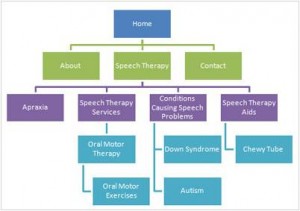
Taking the example of speech therapy, Kieron illustrates how a search on YouTube generated associated words such as:
• Autism
• Oral motor exercise
• Chewy tube
• Down syndrome
• Oral motor therapy
• Apraxia
That would not have been generated through Google’s tool. So if you are researching a subject area for a client in which you don’t have in depth knowledge, YouTube could prove a valuable tool in your keyword research armoury.
A gold mine of information
People from all walks of life, professionalisms and personal experiences use YouTube as a platform to share their knowledge and experiences. These are normally people who use the search engines daily and so are invaluable sources of information.
So by using YouTube as a resource you could change your initial site navigation from:



To something more representative of your industry with greater SEO potential:
So next time you are doing some keyword research – either for yourself or for a client – don’t overlook the potential of YouTube.
October 25th, 2010 — blogging, blogging for business, copywriter, search engine optimisation

When you enter the world of blogging as a newbie its terminology can seem rather daunting.
Tweeting – SEO – HTML – Plugins
The best advice I can give anyone who’s looking to start a blog is to be yourself.
By all means take a look around the internet to see what other bloggers are doing, but at the end of the day, your blog is a reflection of you. It is your vehicle through which you can voice your opinions, give reviews and share information with others.
So how can you move from novice to expert blogger?
Here are 4 simple things to remember which will help you make that transition.
1. Be unique
As I mentioned earlier there’s nothing wrong with looking at other blogs for inspiration, but don’t try to copy or conform to the prevalent style in your industry.
You are an individual. You have your own dress style, your own sense of humour, you wear your hair the way you like it and you go to the places you want to go to. So transfer that individuality to your blog.
When starting out you’ll probably read dozens of articles about how to get started. Most of the information will be relevant and useful, but remember to use that as a guide only and be yourself.
2. Reliable
When you start to blog and build up a readership, make sure you stick to your blogging frequency. If you post on a Monday, Wednesday and Friday your readers will grow to expect new posts on those days from you. So make sure you don’t disappoint.
If your readers take the time to leave a comment on your blog (that’s not spam) respond to it. Even if it’s a ‘thank you for your comment’ generating that type of conversation is what blogging is all about.
3. Think
If you want to engage with your readership make your posts personal. That doesn’t mean to say you have to write about what you did last night or what you ate for breakfast. On the contrary, make sure your personality comes through your writing. Include your opinions; relate topics to situations you have been in.
Resist the urge to post in haste. If someone has wound you up or done something you feel strongly about don’t quickly write a caustic post. Always think about what you’ve written before you hit publish.
4. Attractive
Although it’s the content on your blog that will keep your readers coming back for more, it also has to look attractive.
There are numerous free templates out there so make sure you find one that suits you. Keep it simple and unfussy – less is most definitely more.
Blogging is a great way to engage with people, voice your opinions and share information. Doing it regularly will help you quickly learn some of the technical stuff. But don’t think you won’t be able to cope with it. Most blog platforms are simple to use.
I’ve been blogging for 3 or 4 years. It has helped me develop as a writer, put me in touch with some amazing people and it’s proven to be a valuable part of my search engine optimisation strategy for my business as a copywriter.
It has never been easier to get your voice published so make the most of it – start your blog today and before you know it, you’ll be an expert.
October 22nd, 2010 — copywriter, Google local, internet marketing, marketing
Have you claimed your Google Local listing yet?
If not, you should.
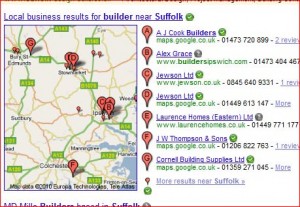
One very good reason is that it’s free. A second is that it could give you the opportunity of appearing in the Google 10 box (shown below) which will give your local Google exposure a shot in the arm.
If you have claimed yours, well done you’ve taken the first step to boost your online visibility. But how are you using it?
Have you just claimed it and left it at that?
Your Google local listing is more than just a line of text. It should be viewed as a marketing tool for your business – a free marketing tool.
When compiling your listing you have the opportunity to add video, photos, receive customer reviews and list events.
Utilising all of these tools will help generate more business for you. Yes it will take time, something we all could do with more of, but it will be worth it. Plus you can manage the effectiveness of your listing through its analytics.
Try to think of it as a dynamic Yellow Pages. Unlike its paper counterpart, your Google listing is:
- Versatile
- Free
- Interactive
Make the most of it and keep it updated with fresh content. Encourage customers to write a review; list new offers and events. Basically treat it as you would any other form of marketing. Just because it’s free doesn’t mean you should neglect it.
October 20th, 2010 — copywriter, freelance copywriter, social media, social media marketing
 Social media is something we all know we should be doing, but actually getting started seems rather daunting.
With blogging, Twitter, Facebook and all the other forums and channels out there, where on earth do you start? How do you tweet? What’s a poke?
These are questions that act like a barrier to people dipping their toe into the warm waters of social media for the first time.
But fear not as help is at hand.
I came across a post the other day on dailybloggr.com about a Beginner’s Guide to Social Media by Creative Concepts LLC. It is a guide that takes you through the basic terms used in social media.
It’s well worth a look and you can download it for free here.
October 18th, 2010 — blogging, blogging for business, copywriter, freelance copywriter
 What type of blogger are you?
Do you spend time writing posts and publishing them only to move on to the next one and start the process all over again?
But as you launch each one out into cyber space don’t forget about it. The content is valuable so you have to make the most of it.
Unlike many other forms of communication, a published blog won’t disappear (unless you delete it of course) so it’s vital you make the most of its content and keep it working for you.
So how do you keep the buzz going?
Here are my top 6 tips to extend the shelf life and appeal of your blog posts:
1. Follow
Often over time the information in your original blog post may need updating or it could become current again due to what’s happening in the world.
Take the opportunity to write a follow up post linking back to your original one. This will not only bring the first post out of moth balls, it will also give added value to your readers by updating them on new ways of thinking.
2. Links
Whenever you write posts that relate to past ones show this by linking them. Not only will this generate a wider audience for your original post it will also highlight the relevancy of your blog for that particular subject.
3. Re-Tweet
Twitter is definitely the blogger’s best friend. It is a great way to get your posts out to a wider readership. If after a period of time your post is still relevant, bring to your followers attention by re-tweeting it.
Don’t do it too frequently though as your followers won’t want to be bombarded by links to blog posts all the time.
4. Repurpose content
As you’ve spent time creating the content in the first place, why not reuse it? Spinning it into an article will help get your name out there as an authority on your topic. Plus using keyword rich links back to your website will help your SEO strategy.
5. Optimise
The beauty of writing for the web is that you can optimise your text to maximise your chances of appearing in the search engine results.
Using carefully chosen keywords will help ensure your blog posts remains prominent for a long time to come.
6. Newsletters
If you send out a monthly newsletter, why not use some of your posts as the basis for news and information?
Take a snippet of the text and add a ‘read more’ link which will take your reader to the original post. This is a great way to pass on valuable information and boost your blog’s readership.
Posts will remain active for as long as they appear on your blog so why not make the most of them?
Sally Ormond of Briar Copywriting is a freelance copywriter and prolific blogger