Entries Tagged 'marketing' ↓
March 2nd, 2012 — Business card design, copywriting tips, marketing
 This article was supplied by printed.com digital printing, suppliers of high quality business cards members of the Direct Marketing Association.
The author’s views are entirely his own and may not reflect the views of FreelanceCopywritersBlog.com. If you are interested in producing a Guest Post for this blog, please get in touch with your ideas.
When it comes to promoting your business, get your hand in before the competition with a business card that tells your customers who, what and where you are. Next time they need those services, they’ll know who to call.
Every business has to ‘buy’ its customers, in one way or another. Spending your budget on business cards is a very simple but extremely effective marketing strategy. There’s nothing like getting your name out there when it comes to attracting business. Not only this, but compared to placing adverts in papers or on the radio, creating business cards is incredibly cost-effective thanks to digital printing. Digital print runs are short and economical, and supply high quality material quickly. Follow these five steps to make a business card that stands out from the crowd and enhances the professional image of your business.
1. Content
Small as a business card may be, it’s all about getting the right information onto it so that your customers know who you are, what you do, and how they can get hold of you. Leave just one of these out and your cards are as good as useless. Don’t forget contact details, including a website address and phone number. Social media information is vital in this day and age: add your Twitter name or Facebook URL to broaden your customer base. Once you’ve got down the basics, it’s important to add a personal touch that demonstrates why your company will deliver above and beyond the competition. Creating a tagline that’s catchy but not flippant should achieve this. A call to action such as “Visit our website” or “Contact us here…” will put your customers on the right track. Lastly, proofread your content again and again before going to print – there’s nothing like a typo to put off potential customers.
2. Design
Your content won’t work its hardest unless layout, images and logo make it presentable. An attractive design grabs the attention, and images have the capability to convey a message as well as or sometimes better than words – and sometimes in less space. If you go for something a little bit different (check the internet for ideas on creative business cards) make sure it fits with your branding and ethos, so that it really inspires people to think rather than coming across as a gimmick.
3. Be Brand Consistent
Content, design and logo should match your wider branding, from in-store branding to website design. This strengthens your brand and reduces customer confusion. If your business card uses one colour scheme, and your website another, your branding will be weakened. Make sure your designs support and integrate with each other to make your message more powerful.
4. Quality
The best design in the world will suffer if the printing is poor quality. Choosing a print company with a good digital colour machine, and which prints on 400 gsm stock or heavier, will ensure your cards are completely professional. Business cards should ideally be coated on both sides for durability and sleekness. Ask for some test prints to make sure the design prints well.
5. Going to print
Digital printers produce the best quality cards for the least amount of money. Most companies require designs of at least 300 dpi, but ask your chosen printer for their individual guidelines and requirements. The company should be able to advise you on matters such as design and layout, and offer test prints before the full print run.
With a little effort, and attention to detail, the company will be able to produce business cards that perform far beyond the outlay invested in them. The whole face of your brand will be improved by the use of business cards, which give off a slick and professional impression. As long as pitfalls are avoided (including typos, missing content, inconsistent design and poor quality printing), your handy business cards are the ideal way to circulate the capabilities and details of your company, in a neat, pocket-sized and transportable form.
February 13th, 2012 — facebook, internet marketing, marketing, online marketing, social media, social media marketing, twitter
 One of the main barriers preventing businesses from getting stuck into social media is that they don’t believe you can actually sell using it.
Other than the time issue, many people don’t utilise social media because… ‘Why do I want to know what someone had for lunch?’ Yes, people do talk about sandwich preference, but that is all part of building relationships and allowing people to get to know you.
And those that do dabble give up after just a week or two because they aren’t seeing results. Well, first off it takes time for your social media activities to bear fruit. And, if you’re just using Twitter or Facebook to bombard people with lame sales messages, you’re not going to have any success because you’re just turning people off you and your business in their droves.
You see, although it is possible to sell just about anything through social media, it’s not somewhere people hang out who are looking to buy a particular product. They are there to see what people are saying, or looking for information to a particular problem they have, or an expert to give them a helping hand.
How to get results
As more and more people become ‘comfortable’ with social media, they are increasingly turning to it to find out information. And that’s where you come in.
So, if you are going to make the most of this golden opportunity to reach out to a whole new marketplace, you need to have a strategy in place.
1. Test
The only way you are going to find the right approach is by testing.
Which method produces the most engagement?
Once you’ve discovered what works for you, stick to it, but continue to monitor your results.
2. Target
If you want to use social media you have to ensure you are targeting the right people. Use keywords within your tweets and updates and hash tags.
So, make sure you know who your audience is and what’s important to them.
3. Trust
People will only buy from you once they trust you.
How do you get them to trust you?
Giving away great information, engaging with them and making your content easy to share will help to build trust.
4. Engage
Social media isn’t a one way street. If you want people to like you and trust you, you have to engage with them. Ask them questions, post a poll on your Facebook page, do a question and answer session and ask for feedback.
All of these activities will make you more accessible to them. And if you’re accessible, you’ll be seen as approachable – a business they would want to buy from.
5. Call to action
Of course, once you have their trust and engagement you have to ask them to do something – don’t assume they will automatically buy.
Direct them to your website, make them aware of your offers, or ask them to sign up for your newsletter. Whatever it is, make sure it’s clear.
So, can you really sell anything through social media?
Yes, you can if you get your approach right.
Over to you
What successes have you had with social media?
As a copywriter I’ve gained several new clients through Twitter – leave a comment below and share your experiences.
January 30th, 2012 — copywriting tips, Leaflet copywriting, marketing
 This article was supplied by Printed.com, suppliers of unbeatable quality digital flyer printing, and a shortlisted company for this year’s industry leading Print Week Environmental Company of the Year 2011 award.
The author’s views are entirely his own and may not reflect the views of FreelanceCopywritersBlog.com. If you are interested in producing a Guest Post for this blog, please get in touch with your ideas.
A flyer campaign can offer a high return-on-investment due to its ability to reach a targeted demographic with a specific, relevant message. Once you have written your flyer, or flyers, the main issue is how and where to distribute them for maximum effect.
Like everything else, the business world is dependent on the written word to communicate information about its products and services. No matter how many thousand words a picture is worth, text isn’t going out of fashion: there is simply no substitute for a paragraph, page or book of words to get your message across. Your own flyer is a case in point: flyers are an outstanding way to deliver a simple, brief and accessible pitch to potential customers. Although images can add a great deal to them, flyers stand and fall on the quality of their text.
Flyers as a calling card
Whilst the text on any flyer is critical, it takes on a new relevance when the service you are promoting is text-based. Here your flyer presents an additional opportunity and pitfall; it is not just what you are saying, but how you are saying it that will make an impact. As a copywriter, editor, proofreader, advertiser, scriptwriter, bid writer (the list goes on), the quality of the text on your flyer as well as the service itself will form a vital part of attracting new clients. At the most simplistic level, you have to be absolutely obsessive about detail; if you are offering a copywriting service, for example, your potential customers will not have much confidence in you if your flyer is littered with minor errors – something that might be forgiven in a different industry. Conversely, if your flyer is well designed and laid out, and the text is compelling and letter-perfect, this in itself serves as an advert for the service you are offering. The flyer is an advert and portfolio sample in one.
Distributing your flyers
Once you have identified a need or niche, and composed your flyer accordingly, you need to make sure it reaches the right people. One of the biggest advantages of a flyer campaign is that they can be used to target certain demographics. Local businesses with a broad appeal (such as a restaurant, for example) might benefit from distribution to a particular post code. Other services, probably including your own, will require a different approach.
Fortunately, this is relatively easy with a little research. You will know from experience that flyers are distributed in a variety of ways – direct to your door, in magazines and other publications, and displayed in public places. The only task is to establish which of these are most relevant to your business and will provide the best ROI. That way, you need send out comparatively few flyers, knowing that the people they reach are likely to be interested in the service you provide. Specialist and trade publications are a good place to start, since you know that these are industry-or interest-specific. You may also be able to purchase mailing lists of people who have used or expressed interest in similar services in the past.
Conclusion
Some forms of advertising (such as newspaper ads or radio commercials) aim to reach a large number of people representing a cross-section of the population. Consequently, this is best for businesses that have a broad appeal. Flyers, on the other hand, typically reach a smaller number of people with a specific message that – with a little research – can be tailored to their needs. This is why a flyer campaign can offer such a high ROI: flyers are very cheap to produce, and can be sent to the people who will most likely respond well to your message. For a text-based service, there are a wide range of opportunities to distribute your flyer to potential and relevant customers, due to the large number of publications aimed at different business sectors.
January 11th, 2012 — marketing, online marketing, search engine optimisation, seo

This post was first published back in 2009, but still remains as relevant today as it was back then.
To get 2012 off to a great start I though it worth while pushing this one ‘out there’ again to help you get one step ahead this year…
Everyone has heard of SEO.
But not everyone understands how to utilise it to promote their websites. Many still believe that over stuffing their website copywriting with keywords is what SEO is all about – wrong.
Many believe that by simply listing all the keywords they can think of on their webpages is right – wrong.
And as for those who still insist on using ‘black hat’ strategies – well, we’re not even going to go there.
Understanding SEO and how to use it to get Google to love your website is key in the online world.
At the end of the day, if you’re an online marketer, you’ve got to get to grips with SEO if you want your website to survive and thrive.
Therefore, to help you stay one step ahead, here’s a fantastic guide from those amazing people over at Seomoz.org. They have put together a list of the important and not so important aspects of SEO to help you demystify search engine optimisation – Search Enging Ranking Factors.
It’s a worth while read and will make a world of different to your online marketing.
January 9th, 2012 — b2b copywriter, b2c copywriter, Call to Action, copywriting tips, marketing
What is a copywriting motivator?
Well, before I answer that, think for a moment about what it is that makes you decide to buy something.
First off, you’ll have a need (whether you’re conscience of it or not). Whether it’s a party coming up that you need a new dress for (and shoes, bag, make up etc.), or a problem with your business that you need a solution for, something will trigger a potential buying decision.
Last week, I was leaving my Accountant’s office at about 5pm. It had been a long day and I’d not had a lot to eat. As I walked back to my car, my stomach was beginning to complain bitterly about the lack of food it had seen that day. To reach my car, I had to walk past a new Indian restaurant. The smell was absolutely heavenly – so you guess what I had for tea that night.
In that instance, my motivator was hunger and the solution I was presented with was the aroma of Indian food.
Hitting the right spot at the right time
Generating sales through copywriting motivators is all about identifying your audience and being in the right place at the right time.
The motivators you identify are going to be pressure points that when pressed, encourage your customers to buy.
Therefore, as well as identifying your target market, you’ve also got to convince them they must buy your product or service, because if they don’t, they’ll be missing out on an excellent opportunity.
For arguments sake, let’s say you have an email marketing solution to sell.
You’ve identified your target audience as being SMEs who are looking for an automated solution to help them reach a wider audience via email.
Your copy shows all the benefits of your product; they know they want to buy it because it will help them market their business more effectively, but they’re still hanging back. So, it’s up to you to give them the motivation to buy.
Becoming Mr or Mrs Motivator
OK, it’s time to bring on the big guns.
What is it going to take to make them buy your product?
You’ve already sold them on the benefits and they know your product offers them all the features they’ve been looking for. So how do you get them to take the final step and buy?
It’s time to get motivating:
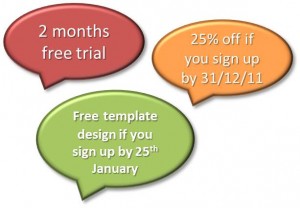
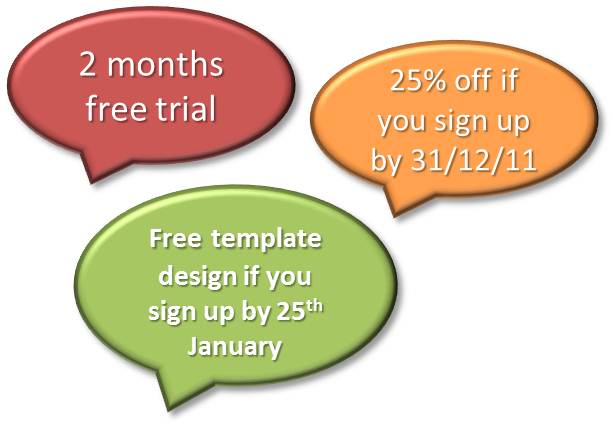
Whether you use a limited discount, offer a free service (for a limited time only) or limit your product in number (scarcity = desirability), these motivators will encourage your customers to make their buying decision quickly – after all, no one likes to think they’ve missed out on a great deal.
It’s human nature to hang back before parting with our hard earned cash. Every now and then we need a little push to sign on the dotted line.
We all love that feeling of getting something for nothing (or at least a discount), so offering a motivator, like one of the above, will help you get your sale and your customer the service they need.
Over to you
What motivators have you used in the past?
Have you found some to be more effective than others?
Leave a comment and share your experiences.
 This article was supplied by printed.com digital printing, suppliers of high quality business cards members of the Direct Marketing Association.