Entries Tagged 'marketing' ↓
November 8th, 2010 — Content marketing, Content writer, copywriter, marketing, online marketing
 Content marketing is all about getting out there, getting found and building a reputation for expertise in your field.
But simply churning out articles and blogs isn’t good enough. You have to concentrate on generating quality content if you want your hard work to pay off.
There are three elements that go together to help you excel at content marketing:
- Create content that sells you
- Content that is optimised for the search engines to increase its longevity
- Repurpose your content and spread the word
Many people don’t get the idea of content marketing—it’s hard work—I don’t have time for it—no one reads it anyway…
Think like that and you’ll never get anywhere. But think of content marketing as a dirty great big megaphone that ensures your message reaches the parts other marketing can’t reach and you begin to understand its potential.
If your readers see your content all over the internet they will believe your company is providing great content, your giving valuable information, you are a market leader which means they’ll be more inclined to pick you over and above your competitors.
Content generation means you’ll get found
So what is content?
We are not just talking about white papers and reports, your content can be in the form of articles, blogs, videos, FAQs, audio.
Offering a variety of styles will appeal to different audiences therefore ensuring your message will be heard loud and clear. Not everyone likes to read long reports, not everyone likes to watch video, not everyone likes to listen to audio but by offering all forms of media you will provide something for everyone.
How to make your content great
1. Don’t be over promotional
The first thing to remember when creating your content is for it not to be constantly promotional. Yes you are producing content to promote your company but it can be done in subtle ways.
By giving information to help your readers, you will be showing yourself as an expert that is open and approachable. That alone will promote you without you blatantly pushing your products and services.
2. Be relevant
For your information to resonate with your reader it has to be relevant to them. You have to understand what your reader wants and generate it for them.
3. Well-written
You may not be writing a novel but your content must till be written like a best-seller. It has to be engaging, it has to be in good English, grammatically correct—you can’t afford to put out information that is sloppy and not thought through.
4. Relevant to your company
As your readership begins to grow, you must ensure you produce content that is relevant to your marketplace and your company.
If you are a copywriter and suddenly start writing about shoes (OK daft example but you get my drift), you audience is going to be left wandering what on earth’s going on. So make sure you keep on subject.
For example on this blog I talk about copywriting, social media marketing, search engine optimisation, online marketing, off line marketing—basically all aspects of sales and marketing. So as you can see it doesn’t have to narrow, you can widen your scope of encompass all elements of your chosen field.
5. Promote it
If you’re going to write it, promote it—otherwise what’s the point?
Use all the tools available to you—social media, PR, search engine optimisation—make it stand out and get it in front of your audience.
So if you want to excel at content marketing, write regularly, write well, write relevant material and promote it.
November 3rd, 2010 — copywriter, internet marketing, marketing, Video marketing

Your website is a reflection of your business.
For many people it will be the first contact they have with you therefore it must portrait your business in a professional, approachable way.
Your website’s design and the copywriting it contains will go a long way to persuading your reader that you are the company for them, but what if you want to get even more personal?
The power of video
You may have noticed while browsing the net that more and more companies are incorporating video on their website.
But do you think they are a good thing and could you use the power of video to enhance your message?
Well let’s take a few minutes to think about what a video could do:
1. Personal touch
A corporate video, especially one showing you, is a powerful way of conveying your (or your company’s) personality to your viewer. Although it is possible to use the written word to convey this too, writing is unable to show your personality in the same was as a video.
By directly speaking to your customer, you will make an instant connection and they will feel as though they already know you when they decide to do business with you.
2. Product/service insight
It is also a means of quickly showing your product/service range to your viewer.
Rather than having to navigate through your website to read about the particular product/service they need, a video can quickly show them what you can offer. Of course, you can also utilise videos as ‘How to’ guides to provide your visitor with a comprehensive library of help topics which will add value to your relationship with them.
3. Innovative
The use of video on your website will also show you as a forward thinking organisation. Utilising the latest technology shows you as a company that thinks beyond the normal limits of marketing.
4. Search engine optimisation
Google loves video so incorporating it within your website will give your search engine optimisation a boost. Whether you host it directly on your website or bring it in from YouTube, utilising the descriptive element of your video will enhance your online visibility.
Sounds great doesn’t it? But there are also a few other things you have to take into consideration…
- Music – not everyone will be thrilled if your website begins to blast out music as soon as it’s open. Make sure there is an obvious icon to click to mute or reduce the decibels.
- Auto play – don’t have your video on autoplay. Have it plainly visible so your reader can decide when (or if) they want to play the video.
- Load speed – video can affect the load time of your website so be careful. When browsing the net people aren’t going to want to hang around while your site loads.
Video can be a very powerful sales tool. It makes an instant connection with the viewer, offers an innovative way to market your products and a valuable tool through which you can offer help and guidance to your customers.
October 22nd, 2010 — copywriter, Google local, internet marketing, marketing
Have you claimed your Google Local listing yet?
If not, you should.
One very good reason is that it’s free. A second is that it could give you the opportunity of appearing in the Google 10 box (shown below) which will give your local Google exposure a shot in the arm.
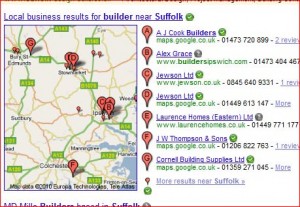
If you have claimed yours, well done you’ve taken the first step to boost your online visibility. But how are you using it?
Have you just claimed it and left it at that?
Your Google local listing is more than just a line of text. It should be viewed as a marketing tool for your business – a free marketing tool.
When compiling your listing you have the opportunity to add video, photos, receive customer reviews and list events.
Utilising all of these tools will help generate more business for you. Yes it will take time, something we all could do with more of, but it will be worth it. Plus you can manage the effectiveness of your listing through its analytics.
Try to think of it as a dynamic Yellow Pages. Unlike its paper counterpart, your Google listing is:
- Versatile
- Free
- Interactive
Make the most of it and keep it updated with fresh content. Encourage customers to write a review; list new offers and events. Basically treat it as you would any other form of marketing. Just because it’s free doesn’t mean you should neglect it.
October 13th, 2010 — copywriter, freelance copywriter, marketing
 The copywriter’s green cross code
When writing sales and marketing content, many people make the mistake of diving straight in. Creating content is frequently one of those jobs that’s endured and squeezed into an already hectic day.
But content creation is vital for your business. Not just from an online SEO point of view, it’s all about getting your message out to your audience effectively.
Stage 1 – Stop
Stop when we haven’t even started?
Definitely.
You can’t write anything until you’ve stopped and thought about what you are doing. Every piece of copy must have a purpose. Ask yourself:
- What is going to be the best platform for your message?
- What do you want to achieve from your copy?
- How do you want your audience to react?
- What do you want to tell your audience?
- What end result do you want to achieve?
There is a lot to think about before you pick up a pen or go anywhere near your keyboard. If you want your copy to be powerful and compelling you have to do your homework first. If you don’t you’ll produce something disjointed without any real direction.
Think of your content creation as developing a new product. You wouldn’t sit down and cobble together a new product without doing any research and development, so why just throw out half hearted sales copy?
Stage 2 – Look
When creating content, although your message is vital, the way your content looks will also have a lot to do with its success.
If your copy doesn’t look appealing, no one’s going to read it. And if they don’t read it it’s not going to have the desired effect.
Make your writing accessible by using headings, subheadings, bullet points and images. If someone is faced with a solid page of text they are not going to read it. But, give them a page with plenty of white space, bullet points and small chunks of text, and they’ll be more inclined to take time to read it.
Stage 3 – Listen
This takes many forms – you have to listen to your audience and your business. Your content has to tell your reader what’s in it for them but it also has to represent the voice of your business.
But listening doesn’t just relate to your business and audience, it is also something you should do before pushing your content out into the marketplace.
When you’ve honed your message read it out loud. Whether its website copy, brochure content, email content or a case study you have to hear it to make sure it flows, makes sense and will provoke an emotional response in your reader.
Hopefully you’ll now see that writing content for your sales and marketing is much more than just stringing a few sentences together. A lot of thought, planning and shaping has to go into every piece of content you produce.
So remember, next time don’t just churn out any old thing – stop, look and listen before you pucblish.
October 6th, 2010 — brochure copywriting, copywriter, freelance copywriter, marketing
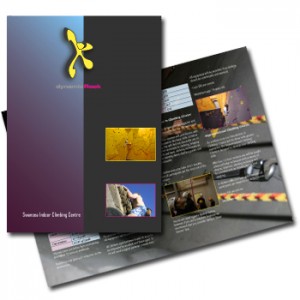
With more and more companies turning to online marketing and advertising, is there still a place for the humble brochure within your marketing armoury?
Local search and SEO are huge today and many businesses are (quite rightly) investing heavily in these areas. After all, more and more people are turning to the internet when looking for products and services. Plus, with 85% of all search traffic clicking on organic listings rather than the sponsored links (PPC), it’s not surprising that this is where the focus on online marketing is these days.
So has the company brochure really been consigned to the rubbish bin once and for all?
Let me leave this with you
However much I hate it, face to face networking is here to stay. Nothing can replace meeting someone in ‘the flesh’ and connecting with them on a personal level. Personally I am not a fan of networking as I’m the type of person who is terrified of being in a room of strangers. Walking up to a group and breaking into a conversation is harder for me than undergoing root canal surgery.
But it is something I force myself to do every once in a while.
When you are in that situation, having a brochure often has more impact that handing over a business card. There’s a lot more room to get your message across for a start. But that doesn’t mean you should fill it with boring, pretentious nonsense that’s going to turn the reader off.
Think brochure, think web copy
I’ve often written about the importance of getting your website copy right.
You have to grab their attention with a great headline, sell the benefits immediately, talk to them and then tell them what to do. Compiling your brochure should take the same approach.
It should make the reader sit up and think ‘Wow! These guys are great. I must phone them immediately.” OK, a bit cheesy but you get the picture.
Your brochure should:
Look great
That doesn’t mean it has to be bold and colourful. Some of the best brochures I’ve seen have been very simple. Whatever look you go for, make sure it fits with your brand and company image. Try to make it fresh, eye-catching – something that’s tactile that they’ll want to pick up and read.
Talk the talk
Just like your website, never, ever begin your brochure…”We’ve been in business for 40 years and pride our selves on…”
Who cares?! Certainly not your reader.
Think benefits, think offer, and think like your customer:
- Tell them what you’re going to do for them
- Sell them the benefits of your business
- Tell them why your products or services are the perfect fit
A brochure isn’t your soap box from which you can shout about your achievements. It’s your website in their hand. It’s a piece of marketing that they can keep with them and refer to whenever they need to.
Tell them what to do next
All too often a great brochure is spoilt by one omission – a call to action.
Your brochure is designed to be taken away which is why it’s even more important than ever to have a compelling call to action within it. There can be several – one after each section if you like. The main thing is when your reader has absorbed its contents, they know exactly what to do – call you, email you or visit you.
Why you need to know this
With today’s online world people are forgetting traditional off line marketing tools. A brochure may not seem technologically advanced, but there is still a place for them for many businesses.
However it’s important to make them fresh, compelling and different. If you want to stand out from your competitors you’re going to have to get creative.
Sally Ormond – freelance copywriter