October 13th, 2010 — copywriter, freelance copywriter, marketing
 The copywriter’s green cross code
When writing sales and marketing content, many people make the mistake of diving straight in. Creating content is frequently one of those jobs that’s endured and squeezed into an already hectic day.
But content creation is vital for your business. Not just from an online SEO point of view, it’s all about getting your message out to your audience effectively.
Stage 1 – Stop
Stop when we haven’t even started?
Definitely.
You can’t write anything until you’ve stopped and thought about what you are doing. Every piece of copy must have a purpose. Ask yourself:
- What is going to be the best platform for your message?
- What do you want to achieve from your copy?
- How do you want your audience to react?
- What do you want to tell your audience?
- What end result do you want to achieve?
There is a lot to think about before you pick up a pen or go anywhere near your keyboard. If you want your copy to be powerful and compelling you have to do your homework first. If you don’t you’ll produce something disjointed without any real direction.
Think of your content creation as developing a new product. You wouldn’t sit down and cobble together a new product without doing any research and development, so why just throw out half hearted sales copy?
Stage 2 – Look
When creating content, although your message is vital, the way your content looks will also have a lot to do with its success.
If your copy doesn’t look appealing, no one’s going to read it. And if they don’t read it it’s not going to have the desired effect.
Make your writing accessible by using headings, subheadings, bullet points and images. If someone is faced with a solid page of text they are not going to read it. But, give them a page with plenty of white space, bullet points and small chunks of text, and they’ll be more inclined to take time to read it.
Stage 3 – Listen
This takes many forms – you have to listen to your audience and your business. Your content has to tell your reader what’s in it for them but it also has to represent the voice of your business.
But listening doesn’t just relate to your business and audience, it is also something you should do before pushing your content out into the marketplace.
When you’ve honed your message read it out loud. Whether its website copy, brochure content, email content or a case study you have to hear it to make sure it flows, makes sense and will provoke an emotional response in your reader.
Hopefully you’ll now see that writing content for your sales and marketing is much more than just stringing a few sentences together. A lot of thought, planning and shaping has to go into every piece of content you produce.
So remember, next time don’t just churn out any old thing – stop, look and listen before you pucblish.
October 11th, 2010 — Content writer, copywriter, freelance copywriter, social media, social media marketing

The copywriter’s mantra – content is king
You know how important content is, you know how important social media is, but are you using them both to achieve the optimal effect?
Having a social media strategy is great, but if it is going to work you’ll need great content to fuel it. After all you can’t have a conversation if you have nothing to say.
In the same way, generating loads of content is only good if you have devised a way of sharing it.
How to marry content and social media
A recent post on socialexaminer.com called How Content and Social Media Equal Marketing Success takes a look at this point.
The video interview with Jo Puilizzi (author of Get Content, Get Customers) highlights the importance of content and how it must be written in conjunction with your social media strategy.
But the starting point for any business is to identify the online ‘hang outs’ of your customers and start having conversations with them. Building relationships is the foundation to all social marketing – talk to them, find out what they’re looking for, contribute to their conversations and then start to provide great information.
Done effectively, your customers will absorb your information (eBooks, white papers etc) and spread them to others.
The video is about 12 minutes long but is well worth a watch.
So grab a coffee and discover how to make your content marketing go further.
October 8th, 2010 — copywriter, freelance copywriter, website copywriting
 In my role as a copywriter I have harped on frequently about how your website copy should address the needs of your reader. It should be benefits focused and not focused on you.
As a business owner, I know you won’t be able to help yourself. You’ll need an outlet somewhere on your website to shout about you and what you’ve done. As I tell all my clients, that’s what the ‘About Us’ page is for.
It’s your opportunity for the limelight; an opportunity to sell you as a person – so don’t waste it.
Do people really look at the About Us page?
Yes, they do.
It’s an inherent need in all of us to know who we are buying from. We want to know the face behind the business. We want to be reassured they are someone we can trust. And that’s why the About Us page exists. So don’t blow it.
Meaningful
How many times have you read someone’s About Us page only to be completely perplexed. Often you find them written is a very dull and technical way.
Why?
Your reader isn’t going to be impressed just because you know a few technical terms and long words. If your page is to have impact, make the content meaningful. Tell them simply who you are and what your company is about.
Be yourself
Remember what I said earlier? This is your opportunity to sell you as a person. So why do so many people show a stock photo on the About Us page rather than a photo of themselves? Why are you hiding?
If you’re a larger business include a photo of your team. Your reader wants to know who you are so show them.
Be real
Write in a friendly conversational style. Tell your reader why you started your business. The process you went through to develop it into the company it is today. Make it a human interest story – but make sure it is real. Don’t try and pull the wool over your readers’ eyes.
Don’t hide
If you have contact details on this page make sure they are real and accessible. Include a valid email address and telephone number. Show your address and a map – people like to know where you are. If this information is missing they’ll want to know what you’re hiding.
Back it up
To add extra weight to your claims about your business and its service, add in testimonials or sound bites from happy customers. But make sure you reference them – a testimonial without a name is worthless.
The About Us page is very important. It may not be your main sales page but it is there to show your reader who you are and why they should do business with you. So use it to show your human side and connect with them.
October 6th, 2010 — brochure copywriting, copywriter, freelance copywriter, marketing
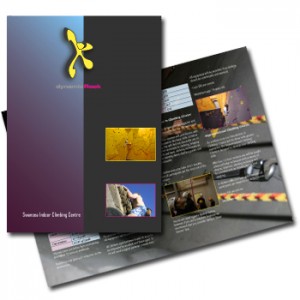
With more and more companies turning to online marketing and advertising, is there still a place for the humble brochure within your marketing armoury?
Local search and SEO are huge today and many businesses are (quite rightly) investing heavily in these areas. After all, more and more people are turning to the internet when looking for products and services. Plus, with 85% of all search traffic clicking on organic listings rather than the sponsored links (PPC), it’s not surprising that this is where the focus on online marketing is these days.
So has the company brochure really been consigned to the rubbish bin once and for all?
Let me leave this with you
However much I hate it, face to face networking is here to stay. Nothing can replace meeting someone in ‘the flesh’ and connecting with them on a personal level. Personally I am not a fan of networking as I’m the type of person who is terrified of being in a room of strangers. Walking up to a group and breaking into a conversation is harder for me than undergoing root canal surgery.
But it is something I force myself to do every once in a while.
When you are in that situation, having a brochure often has more impact that handing over a business card. There’s a lot more room to get your message across for a start. But that doesn’t mean you should fill it with boring, pretentious nonsense that’s going to turn the reader off.
Think brochure, think web copy
I’ve often written about the importance of getting your website copy right.
You have to grab their attention with a great headline, sell the benefits immediately, talk to them and then tell them what to do. Compiling your brochure should take the same approach.
It should make the reader sit up and think ‘Wow! These guys are great. I must phone them immediately.” OK, a bit cheesy but you get the picture.
Your brochure should:
Look great
That doesn’t mean it has to be bold and colourful. Some of the best brochures I’ve seen have been very simple. Whatever look you go for, make sure it fits with your brand and company image. Try to make it fresh, eye-catching – something that’s tactile that they’ll want to pick up and read.
Talk the talk
Just like your website, never, ever begin your brochure…”We’ve been in business for 40 years and pride our selves on…”
Who cares?! Certainly not your reader.
Think benefits, think offer, and think like your customer:
- Tell them what you’re going to do for them
- Sell them the benefits of your business
- Tell them why your products or services are the perfect fit
A brochure isn’t your soap box from which you can shout about your achievements. It’s your website in their hand. It’s a piece of marketing that they can keep with them and refer to whenever they need to.
Tell them what to do next
All too often a great brochure is spoilt by one omission – a call to action.
Your brochure is designed to be taken away which is why it’s even more important than ever to have a compelling call to action within it. There can be several – one after each section if you like. The main thing is when your reader has absorbed its contents, they know exactly what to do – call you, email you or visit you.
Why you need to know this
With today’s online world people are forgetting traditional off line marketing tools. A brochure may not seem technologically advanced, but there is still a place for them for many businesses.
However it’s important to make them fresh, compelling and different. If you want to stand out from your competitors you’re going to have to get creative.
Sally Ormond – freelance copywriter
October 4th, 2010 — copywriter, freelance copywriter, search engine optimisation, seo, SEO copywriter
 The art of Search engine optimisation is enabling businesses all over the world reach a greater audience online.
Done well and it can achieve amazing results, often slashing marketing budgets as expensive off line marketing campaigns and PPC are no longer needed.
But many people are still tempted to cut corners, impatient for results.
Don’t let temptation get the better of you. SEO will take time, but if you try to take short cuts, Google could slap you with a penalty.
Natural Link Building
Links to your website are very important. They act as an indicator to Google showing how relevant your site it for a particular topic. Each link is seen as a vote, so the more you have the more relevant you are perceived.
Buying links is a very bad idea and can be very damaging to your website. If you build your links naturally and ensure they come from related sites (i.e. the same industry/topic) you won’t fall foul of Google.
You can attract good links in a number of ways. For example:
• Create a good Google local profile and fill it with relevant information about your business
• Contact your Chamber of Commerce and enquire about having a link from their website
• Ask your suppliers/clients if they would be prepared to link to you
• Issue press releases
• Add your details to influential online directories in relevant categories
• Write blogs and articles on your industry and link back to your website
Don’t be lazy about back links
Generating back links is often one part of SEO that is forgotten about.
Yes it takes time and is a constant process, but one that is vital if your SEO strategy is going to work. If you find it too much for one person to deal with on their own, get a link building team organised and share the workload.
Don’t indulge in the dark arts
Whatever you do, don’t succumb to using black hat techniques. These are activities that Google frowns upon. They are used by unscrupulous SEO companies to try and get quick results. But they could land you in hot water.
Black hat techniques cover things such as cloaking, using link farms, invisible text and keyword stuffing (more about that in a moment).
No keyword stuffing
The art of SEO Copywriting is quite complex and it pays to get a professional to create your copy for you.
Many people believe that by cramming as many instances of their keywords into their copy as possible, they’ll achieve magnificent rankings.
Well, if you do that, all you’ll achieve is unreadable text. What’s the point in good rankings if:
• People can’t read your copy
• People are completely turned off by your copy
• Your copy doesn’t convert
A professional SEO copywriter will not only create compelling, benefits driven copy that will convert, they will also know where and how to use your keywords in a natural way.
Don’t repeat yourself
In a rush to own as much of the internet as possible, some companies are tempted to cut and paste text from their website into as many directories and online profiles as possible.
Don’t! Google frowns upon duplicate copy. If you fall into this trap you’ll earn yourself a hefty penalty so make sure you only add original content to your website, blogs and directories.
Don’t forget to keep the momentum going
Even when companies manage to avoid all the SEO hurdles I’ve mentioned, without constant maintenance their strategy will fail.
SEO isn’t a static entity, it’s very fluid. You must constantly monitor and tweak it to get the best out of it. Back links must be generated constantly to maintain and improve your rankings.
Your hard work will be rewarded by higher rankings, more targeted traffic and a reduction in your marketing spend.