June 27th, 2012 — Advertising, copywriter
Advertising is everywhere – on the TV, radio, newspapers, magazines, Facebook, Google… the list is endless. 
Sometimes it can be quite subtle, but the increasing use of product placement is making even our favourite films advertising vessels. Take the new Bond film for example. Usually, Bond reaches for his trademark dry martini (shaken not stirred), but in the latest offering ‘Skyfall’, our hero reaches instead for a beer thanks to the film’s makers rumoured $45million marketing deal with Heineken. (The Telegraph). Not only that, but Daniel Craig will also appear on bottles of the beer, while Sam Mendes (Skyfall’s director) will shoot a commercial for them.
In the grand scheme on things, that’s not too intrusive. But what happens when advertisers resort to shock tactics to get us to sit up and take note. This type of graphic advertising is discussed in this wonderful post by Sarah Turner looking at the degredation of women in fashion advertising campaigns.I don’t know about you, but images like that certainly don’t make me want to buy.
As if we weren’t exposed enough to advertising messages, I was horrified to read a report in The Drum about Skype’s launch of in-call ‘conversation ads.’
According to Sandhya Venkatachalam, VP of advertising and monetisation at Skype:
“These new display ad units will appear within the calling window of users who do not have Skype Credit or subscriptions when they’re making 1:1 Skype-to-Skype audio calls using Skype for Windows.
“We’re excited to introduce Conversations Ads as an opportunity for marketers to reach our hundreds of millions of connected users in a place where they can have meaningful conversations about brands in a highly engaging environment. Skype is already at the center of meaningful conversations, where families, friends, and colleagues spend time together.
“While on a 1:1 audio call, users will see content that could spark additional topics of conversation that are relevant to Skype users and highlight unique and local brand experiences. So, you should think of Conversation Ads as a way for Skype to generate fun interactivity between your circle of friends and family and the brands you care about. Ultimately, we believe this will help make Skype a more engaging and useful place to have your conversations each and every day.”
Really?
So, when you’re on a Skype call to a relative or friend on the other side of the world, are you really going to start talking about the ad that annoyingly pops up on your screen? Surely, you’ll have more important things to talk about – please tell you me you would have something more important to chat about?
What’s next? Recorded adverts played during your telephone conversations?
Honestly, is there nothing sacred anymore?
What do you think?
Has advertising got out of hand?
Leave a comment below and vent your opion.
June 25th, 2012 — copywriter, copywriting tips, proofreading
Yes, I know, us copywriters are always banging on about the important of proofreading.
And no, I’m not going to claim to be whiter than white in that area. I am human, I make mistakes, but I do my utmost to stop any typos slipping through.
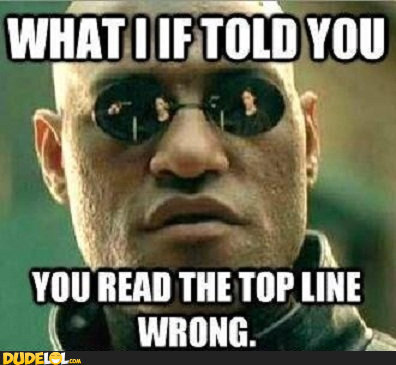
You may have seen this on Facebook recently (it’s appeared in my timeline several times):
Go on, admit it. You had to read it twice, didn’t you?
See how easy it is to let a mistake slip through?
So how can you make sure your typos are spotted before it’s too late?
Two pairs of eyes are better than one
One of the best ways of proofing your work is to get a trusted colleague to read it through for you.
By trusted I mean someone you know who will actually read every word rather than skimming it.
Because they haven’t written it, they are more likely to spot any errors you’ve made.
That’s great if you work with other people, but what happens if you’re a freelancer working on your own?
Going solo
Proofing your own work is tricky.
You wrote it, you know what you wanted to say, so your brain has the tendency to trick you into thinking what you thought you wrote is actually what is on the page.
Of course, you could hire in a proofreader to check your work for you. But that adds an additional cost to your work that you’ll either have to absorb or pass on to your clients.
The other option is the one I use. Yes, it’s time consuming, but it does pick up your errors.
First, once you’ve written your copy put it to one side – preferably for at least 24 hours – and go and do something else.
Then, print it out.
OK, I know, that’s not very environmentally friendly, but reading off a screen is horrible and you can’t easily mark-up errors when you find them.
Next, start from the last word on the last page and read it backwards, right to left.
Why?
For starters it won’t make sense so you’ll concentrate on each word, meaning you’re more likely to spot any typos.
Once you’ve read through the whole document like that, start from the beginning and read it out loud. This will not only highlight any grammatical errors and incorrect word usage, it will also draw your attention to any repetitions and the rhythm of your writing.
Then, go back through and make the changes you marked-up and go through the whole process again.
It might sound long winded, but it will save a lot of embarrassment in the long run.
Over to you
Do you have a different technique for proofing your work? If so leave a comment below and tell us about it.
June 22nd, 2012 — facebook, social media, social media marketing, social media training, social networking, twitter
Freedom of speech has long been embraced by society, but are we really free to say exactly what we think without fear of repercussions?
A short while ago, I wrote a post called Social Media – Why You Should Watch What You Say, in which I talked about how employers use social media to screen job applicants.
But it’s not just your potential working life that could be affected by your tweets and Facebook status updates (or those unfortunate photos taken of you on a big night out), you could also jeopardise your career.
The Drum recently reported on such a case where a council press officer was forced to quit his job after an ill-judged tweet.
Working for Lambeth Council, the press officer in question tweeted, from his own personal account, that “Having spent a considerable amount of time in Streatham, my solutions for supporting the High Road mostly involve napalm.”
Needless to say, his tweet was met with several complaints and, despite an apology, he quit his job.
But was that right? Should he have had to quit his job over tongue-in-cheek comments made on his personal social media account?
And there lies the very murky grey area. Had that comment been made through his official work account, no one would question the outcome. But as it came from a personal account, does that make it any less offensive?
Understanding the power of social media
The news is full of instances where people use social media in naïve ways. Whether it’s something like the case above, or the more serious and malicious practice of ‘trolling’ (the posting of inflammatory messages online with the main aim of provoking readers into an emotional response or otherwise disrupting normal on-topic discussion – Wikipedia), the use of social media can land people in hot water.
A recent case of trolling was highlighted following a landmark High Court ruling. When a lady from Brighton posted a supportive comment for X Factor contestant Frankie Cocozza, trolls ‘left comments falsely accusing [her] of being a paedophile and drug dealer for supporting the singer…’ (The Drum).
The High Court ruled that Facebook had to reveal the identities of the cyberbullies (their names and IP addresses) so civil actions could be pursued again the ‘trolls’.
Do your employees understand your social media policy?
With social media becoming a powerful business tool as well as a social communication tool, it is essential your employees fully understand your social media policy to prevent these types of instances happening.
Your businesses social media usage should concentrate fully on engaging with your customers and adding value to your relationships with them, therefore it is essential your employees fully understand what is expected of them.
- Make sure you list what they can do.
- Ensure they fully appreciate that they are responsible for what they write (whether it’s on behalf of your company or on their private accounts).
- Encourage them to engage with customers using their name and title so the customer knows who they are talking to.
- Make sure they think carefully before posting – it’s Ok to offer opinions, but they must consider how their comments will be viewed by others. After all, what they say (whether using social media during work hours or in their personal time) will reflect not only on them personally, but also as an employee and on the company.
- Ensure they understand what information is confidential and that should not be shared at any time.
- They should bring value to your company through their engagement.
Over to you
What are your thoughts on social media usage?
Do you agree that the council press officer should have lost his job?
What policies do you have in place to ensure your employees don’t overstep the mark?
Leave a comment below and share your thoughts and opinions.
Sally Ormond – Copywriter
June 20th, 2012 — marketing, QR Codes
Last year, we posted a blog about Using QR Codes as Part of Your Marketing Strategy.
Although they’ve been around for quite some time now, they still aren’t used as prevalently as one would expect in today’s digital world. There have been a number of occasions when their use has been far from successful, such as in places where you can’t use your phone to scan them e.g. underground or up high on billboards, in TV commercials or in emails you receive on your phone.
However, as a creative and affordable method of advertising, there are some companies out there that have actually thought it through properly to come up with come effective marketing ideas.
Of course, some decide to go down the route of using them to generate hype rather than interactivity, but if it works, why not?
To illustrate just a few innovative ideas take a look at this post featured on the Content Marketing Institute website:
7 Creative and Effective QR Code Examples From Arounf the World.
Over to you
Are you using QR codes as part of your marketing strategy?
If so, how are you using them and how successful have they been?
Leave a comment below, we’d love to hear from you.
Sally Ormond – MD and Copywriter at Briar Copywriting Ltd
June 18th, 2012 — copywriting tips, facebook, social media, social media marketing
Thankfully, no two businesses are the same. Could you imagine how boring that would be?
But because every business is different, their marketing strategies will also be different.
Take Facebook for example, just because you find it helps your business doesn’t mean it will help the guy next door. That’s why it’s imperative you take a good look at your business before diving into marketing. You must think about how Facebook would be best used in order for you to get the most out of it.
Before you hang your head in despair, take a few minutes to read through this very useful post I found on SocialMediaExaminer.com that takes a look at 4 different ways you can use Facebook for your business.
So, grab a coffee while you read 4 Unique Ways to Use Facebook for Your Business and kick start your social media marketing the right way.
Sally Ormond – Copywriter