December 12th, 2011 — copywriting tips, marketing
 This article was supplied by Printed.com, suppliers of unbeatable quality digital leaflet printing, and a shortlisted company for this year’s industry leading Print Week Environmental Company of the Year 2011 award.
The author’s views are entirely his own and may not reflect the views of FreelanceCopywritersBlog.com. If you are interested in producing a Guest Post for this blog, please get in touch with your ideas.
Anyone can throw together a business leaflet, but putting together something strong and compelling is a little harder. Here are some top tips for writing something that shines a little brighter than the average leaflet.
Business leaflets are easy to produce and cheap to print, but therein lies their problem. Whilst the best ones catch the eye and can bring a fantastic return on investment, the majority of leaflets are mediocre – poorly designed and written slips of paper that may not even be read before they go in the recycling bin. Given the sheer volume of leaflets that paper the walls of the typical library or get pushed through doors to carpet the average porch, it pays to think a little longer and harder about it than the competition.
Get a sense of what works
Before you write anything, gather a bunch of other companies’ leaflets together and go through them. Give each of them just a few seconds at most – that’s how long people look at a leaflet before passing judgement. Decide on instinct whether you like them or not, and put them into two piles. When you’ve finished, go through the piles again and this time try to work out why some leaflets worked and others didn’t. Once you’ve done that, you’ll have a good idea of what to aim for and what mistakes to avoid.
Meet a need
Whilst good design is a big part of getting people to read your leaflet in the first place, that won’t lead to any conversions unless you’re telling the audience something they want to hear. One of the most common mistakes leaflets make is trying to tell potential customers all about the company in question. The problem is that readers don’t want to know any more than they have to. In fact, in this respect your leaflet isn’t about your company at all: it’s about the reader’s needs and problems. Your company is only important in as much as it can answer those needs. Make sure that the information you state on your leaflet looks at things from the customer’s point of view, not yours.
Keep it short
On a similar theme, customers don’t want to read any more than they have to. Because leaflets are typically only two sides of A4, the temptation is often to cram them as full of information as possible so as not to waste any of your precious space. This is a mistake: solid text is unappealing, no matter how interesting – and it’s unnecessary. Part of the skill of leaflet writing is being able to condense what your business can offer into a few short words and phrases that will leave the reader wanting more – and therefore to contact you. Think of a leaflet a little like a trailer for a film. Images are great for this, because they can say so much more than the words you can fit in the same space. Two caveats are to make sure that the images are relevant and meaningful, rather than just pretty, and to make sure that any pictures do not detract from your text. You don’t need to give people any more reasons not to read your leaflet.
How to start a leaflet
The beginning of your leaflet is the most important part. The first few words or pictures have to be eye-catching and engaging, otherwise the rest of the leaflet is unlikely to be read at all. You should bear in mind that if your leaflet is going to be displayed in a rack along with perhaps dozens of others, the top third is all that anyone will see to begin with. If they don’t like what they see, they will simply move on to another one. Therefore that small area has to give potential customers something to pique their curiosity and read on. Choose your content carefully and for maximum effect.
Check again
Lastly, check and double-check your leaflet before it goes to print. Spelling and grammatical errors look unprofessional and careless: not the impression you want to leave with the reader. Make sure the customer has all the details they need to take things further, and give them a ‘call to action’ or reminder to contact you at the end of the leaflet – the information alone isn’t enough.
December 9th, 2011 — copywriting, copywriting tips, freelance copywriting, Suffolk copywriter, UK copywriter
In A Copywriter Gives Power to the Words we looked at the power words that can help convey your message clearly a nd concisely to your reader.
But there is one very important word that I omitted to mention – “you”.
Why? Well believe it or not, freelance copywriters are actually human beings. We may well be shut away in our offices, sat in front of our computers being creative but we do also have lives and get to go out now and again.
Therefore it is important that copywriters use words to convey their humanness and the best one do that is you.
Writing using those three letters isn’t always easy though. If you have an academic background of any type (we all have) you would have been told time and time again not to address your reader directly.
Well, now you are writing sales material which is completely different and it is obligatory to use “you”, “yours” and “your”.
Everyone wants to be seen as an individual – and who is the person that people find more fascinating than anyone else? Themselves! Therefore always use “you” instead of “I”. So for example, instead of saying:
“Order now and I will send you a free gift”
Say
“Order now and you will receive a free gift.”
If you do have to write about yourself then “I” and “we” are better than your company name as it keeps it more personal and involving.
So remember – you are human, you exist, so talk to your reader conversationally – don’t talk at them from a distance.
Sally Ormond
December 7th, 2011 — blog, blogging, blogging for business
A great way to get your name or your brand name ‘out there’ is by asking bloggers to review your products or publish guest blog posts for you.
This helps you gain back links, widen your audience and generally boost your exposure and therefore should be a valuable part of your PR strategy.
But learning how to pitch your ideas successfully is vital if you want your posts to be accepted.
After all, well known and widely-read bloggers will be inundated by requests every week, so you have to make yours stand out from everyone else’s.
So how do you do that?
How do you get noticed?
1. Generic is bad
Like the rest of us, you’re probably short of time, but cutting corners by sending a single email out to a number of bloggers is a bad idea.
After all, who are they more likely to take notice of? Someone who has taken the time to write an email addressed to them specifically by name, or one that has obviously been sent out to the faceless millions (OK, probably not that many, but you get the idea).
If you’re serious about your pitch, mention them by name and personalise the email by showing your familiarity with their blog.
2. Blind submissions
Gathering a list of blog email addresses and blindly sending out your idea won’t be a fruitful exercise.
If you want to stand a chance, you have to research who you’re sending your pitch to. Let’s face it, as I have a marketing/copywriting/social media blog, if someone sent me a blog about the ideal beauty regime for Llamas I would be very unlikely to consider it.
Only send your ideas to blogs within your niche.
3. Don’t be repetitive
Sending your idea once is fine. But sending the same email again and again is annoying.
By all means chase up your proposal after a suitable time period, but don’t make yourself a menace.
4. Get to know them
If a company pops up out of the blue to try and sell me something and I’ve never heard of them, I’m unlikely to be receptive to them.
It’s the same with your blog pitch. If you’ve taken the time to get to know them, either through Twitter, Facebook or commenting on their blog, your name will probably be familiar to them and therefore they are more likely to respond.
5. Ignoring guidelines
If you’ve managed to get your pitch noticed and received a request to see your post, don’t scupper your chances by ignoring their guidelines.
They’ll probably be along the lines of:
• Your post must be original and must not be published elsewhere
• It must fit within the topic of the blog
• It must not be a thinly veiled advert
• There should be no HTML links in the body text
If you completely ignore these, your post will not only be rejected, any further pitches will more than likely be ignored.
Over to you
Do you regularly submit requests to bloggers?
If so do you have any tips you can offer?
Leave a comment below, it would be great to hear from you.
December 5th, 2011 — copywriter, copywriting
 Neil Stoneham of Voxtree has kindly agreed to allow me to re-post his blog The Importance of Good Copy” on Freelance Copywriter’s Blog.
In it, he takes a good look at why good copy is so important for your business and why a professional copywriter is worth his or her weight in gold. Take it away Neil…
Here is a transcript of the forthcoming article I wrote for the Lancaster Chamber of Commerce magazine “Business Matters”:
Image, it seems, is everything in this day and age. Most of us go to some lengths to look good within a business environment, all with the express intention of dazzling our clients and creating a positive first impression. Same with the way our company is presented – we all want a good logo, flashy brochures and a smart-looking website.
So, what’s wrong with that? Nothing. Image is important, no doubt.
But it can all count for nothing if we neglect the necessity of good copy. As a copywriter myself, it pains me to see businesses splash out on a pristine, beautiful website, only for it to read like a third-rate student essay, replete with bad grammar, awful spelling and some unusual turns of phrase! It’s a waste and, at its worst, an insult to the intelligence of any prospective client.
Even less serious offenders can turn away potentially important sales by failing to write copy that is concise, persuasive and easy to read. After all, if you don’t sound professional, it may unintentionally suggest that your business is less than professional too.
A professional company cares about what it says as well as the way it looks. And it’s a proven fact that strong copy, written to draw people in and keep them hooked, is massively more effective than something bland or badly written.
Some of you may be worried now that your own copy is not very strong and that you ought to do something about it. Perhaps you’ve thought about it for a while but not got round to it. Well, here are a few pointers to help improve your copy so that it turns your core message into sales.
1. Make your text lively and persuasive
Many people feel the need to adopt a formal tone when describing their product or service. This can, however, fall flat and bore clients if you’re not careful. Today, most people accept a conversational tone as part of business patter and can be a boon if promoting something creative and quirky. If you are not sure, the best policy is to keep it neutral.
Remember, too, that you are selling. Clients are only really interested in how your product or service can be of benefit to them. Sounds obvious but it’s amazing how many businesses spend too much time ‘bigging themselves up’ at the expense of providing information that is actually useful.
 2. Accuracy is key
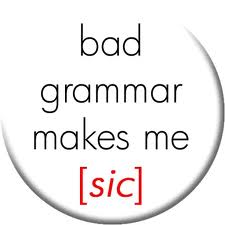
We rarely pay attention to good grammar, spelling and punctuation. In some modern contexts (social media or texting, for example) it may even seem unnecessary. Bad grammar, spelling and punctuation, on the other hand, stand out a mile. It looks sloppy and unprofessional. Even with the best will in the world, a few demons regularly stalk our copy – “their” instead of “they’re” and “your” instead of “you’re” are some of the popular ones. Get your copy checked by someone with a good knowledge of these things before you put it online or, worse still, send it to the printers.
3. Keep text concise
The phrase “Too much information” may have other connotations these days but is still relevant to sales material! When presenting the details of your product or service, tell us what we need to know and no more. Many technical aspects of your product, for instance, may seem important to you but can be tedious for all but the most tech-savvy geek to plough through. Also, get the point. Websites that spend the first two paragraphs detailing your company’s history could drive your potential client to the ‘back’ button and they’ll be away before you’ve told them a thing about what you do.
A word about Search Engine Optimisation (SEO) here. Don’t buy the myth that reams of keyword-heavy content will bag you a high ranking. The next generation of Google will filter this out and reward good quality content that is actually read and shared.
4. Avoid jargon and clichéd ‘marketing speak’
Unless you’re aiming your material at people solely within the same technical field, cut the jargon. Otherwise, it will alienate your clients and possibly lead to misunderstanding. Similarly, most smart people can see through ‘marketing speak’ these days, so treat people with respect and avoid phrases like this:
“When You succeed, we succeed with You. When you dazzle your CLIENTS, we dazzle ours.”
This was actually used by a company and guaranteed that a high percentage of potential clients were confused enough to go somewhere else!
There are, of course, many other issues that distinguish good from bad copy, so it’s worthwhile using a professional if you are serious about getting the words right. After all, it could make all the difference when generating that next big sale.
Over to you
Thanks Neil – so what do you think?
Can you come up with any other ideas why good copy is so important?
Perhaps you’ve seen some particularly good or bad examples?
Leave a comment below, we’d love to hear from you.
December 2nd, 2011 — copywriter, copywriting, copywriting tips
 This is going to be short and sweet, but what do you reckon?
Should your copy be humorous?
Is there a place for it?
Well, before you can answer that you really need to think about your brand.
You’ve worked long and hard to create a particular image, so before you decide to use a touch of humour in your next marketing campaign, ask yourself the following questions:
1. Is it really funny?
Perfecting a humorous campaign takes time. But you do have to remember that not everyone finds the same stuff funny.
Just because you’re humour makes you roll on the floor laughing, it doesn’t necessarily mean it will have that effect on everyone.
2. Oops
Not only do you run the risk of creating something that, for many, is not funny, but you could also end up causing offence.
Poking fun at certain people could land you in an awful lot of hot water.
3. Kill not cure
As I mentioned earlier, you have taken a lot of time and energy getting your brand’s image just right. If you’ve spent time and money creating something that’s renowned for its quality, seriousness and soberness and then put out an ‘amusing’ marketing campaign, you could turn off a lot of people very quickly.
The moral is…
At the end of the day, it’s a brave marketer that goes for the humour angle on a whim.
Make sure you look at your brand, your product and your audience before you start thinking comedy. After all, you want your customers to be laughing with you, not at you.
Sally Ormond – freelance copywriter