April 12th, 2013 — search engine optimisation, Title tags
Of all the aspects of search engine optimisation, the importance of the title tag has remained constant and yet it is all too often overlooked.
This simple line of code packs a mighty punch because it:
- Highlights to Google and the other search engines the relevance of your website in relation to a keyword
- Makes you stand out from everyone else
- Attracts potential customers to your website
In fact it is one of the single most important ranking factors.
For those who are new to all this stuff, let’s take a step back.
Where is your title tag?
As I mentioned earlier, your title tag is a simple line of code.
It sits near the top of your web page’s source code and looks something like this:
<title>Copywriter | freelance copywriter | copywriting services<title>
(That’s one of mine that I’ve used as an example.)
Every page of your website should have its own unique title tag.
Why?
Because every page of your website is indexed by the search engines, not your website as a whole. So by using different title tags for each page you increase your chances of being found in the search results for a range of different keywords.
Now that doesn’t mean to say you’ll instantly appear at the top of Google, the rest of your web page also has to be optimised too, but getting your title tag correct is a step in the right direction.
How do you write it?
Before you allow your creativity to run away with you, Google only allows up to a maximum of 70 characters for your title tag, so you don’t have a lot of room to play with.
It’s important to use your keywords, but make sure your tag is meaningful, especially when selling a product.
For example if you’re selling designer dog collars, make sure that goes in your title tag, if there’s room why not add a price too?
If local search is important to your business adding in your location will also be of benefit. As for your company name, it’s not essential it’s there, but if you’re a well-known brand or your company name is synonymous with the product you’re selling, it would be good to include it.
Your title tag is basically a signpost telling Google what your page is about and the content of your site should back that up with relevant, high quality writing. Working together they will help your website become more visible in the search results.
April 10th, 2013 — twitter
3 tools to help Twitter work for you
Using Twitter for business is a great way to widen your reach. You can chat and build relationships with people who would previously have been ‘untouchable’. For example, there are loads of CEOs and powerful people on Twitter. If you tried to make contact with them through regular channels you’d probably hit a brick wall in the shape of their impassable PAs.
But with Twitter you can follow anyone and they can follow you.
So what’s the best way to get started once you’ve set up your account?
Firstly, I would suggest not using the auto-follow feature. It’s important your Twitter stream is full of stuff that’s relevant to you and just because someone wants to follow you doesn’t mean you necessarily want to follow him or her. So when you get a new follower take a look at their profile and Twitter feed, if it looks interesting follow them back, if not don’t.
Secondly, you need to target who you follow and that means proactively going out there and finding the people you need in your Twitterverse.
How do you do that?
Tracking down people to follow
1. Know your audience
Think about who it is you want to see your tweets. Who are your customers and key influencers?
For example, if you run a catering company you may be looking for hotels, wedding planners, associations, party planners, clubs etc. So stage one would be to start Googling for potential followers.
Once you have a list of companies and their websites, check to see if they’re on Twitter, if they are, follow them.
Not everyone will follow you back, but some will.
Your Twitterverse is growing.
2. Using search tools
There are several tools out there that can help you find followers, but for this post I shall concentrate on 3.
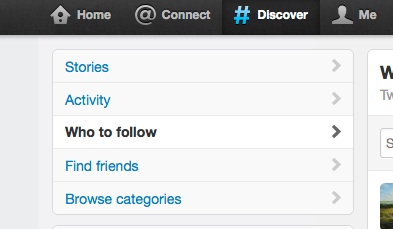
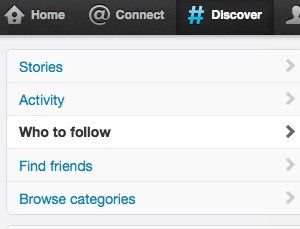
The first is Twitter itself. Not the most refined way of finding followers, but you can search through suggestions of who to follow and browse categories (based on your current followers):
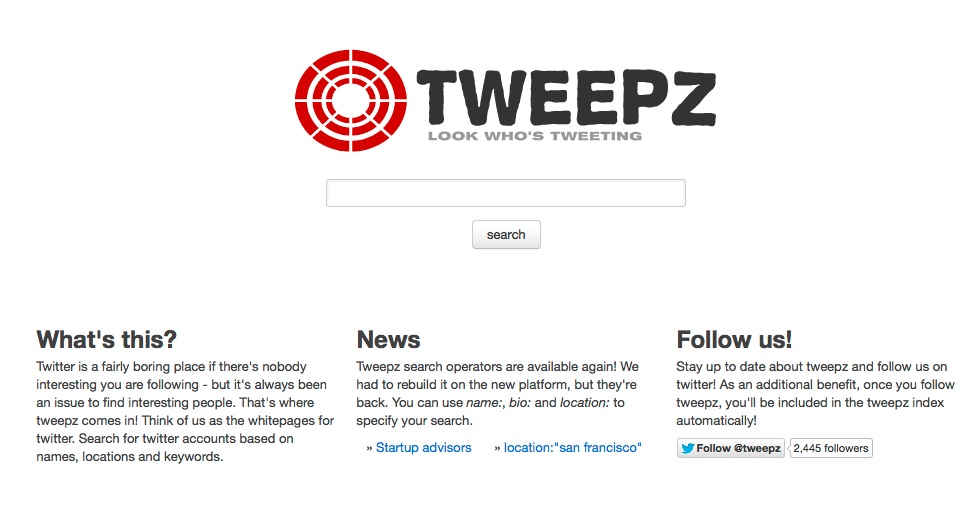
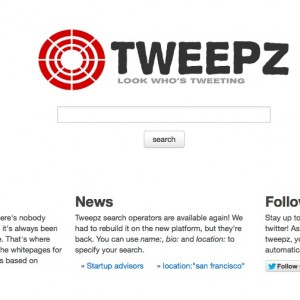
Next is Tweepz, all you have to do is enter a keyword into the search box and you’ll get a list of potential people to follow. Then all you need to do is drill down that list to find the most relevant people and companies and follow them.
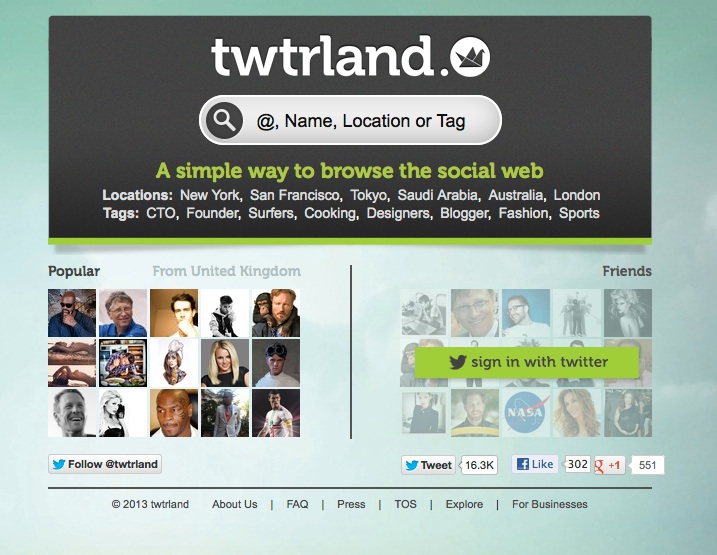
Finally, the third tool is twtrland. Again, after entering a keyword into the search box a list of search results are returned. Then you can filter these results by type – celebrity, power user, casual and novice, location, gender and estimated age.
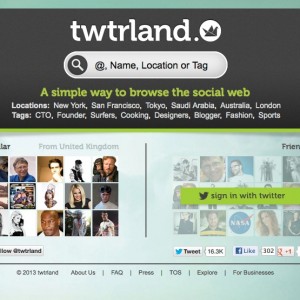
But unlike the other search tools, this one offers much more information. So on top of the usual bio and image, you’ll also get information on the number of tweets they send per day (average), content breakdown, retweets etc.
3. What do you do next?
Once you have your followers it’s time to start interacting with them.
Notice the use of the word ‘interaction’ there? That means no blatant sales pitches, no harping on about how great you are every 5 minutes and no incessant chatter about ‘we did this’ or ‘we did that’.
You have to ‘listen’ to what others are saying and start a conversation with them. If they ask a question, respond and help them if you can. Yes, you can also send out links to your own blogs because they may be useful and it will also help widen your readership, but it’s important to remember that Twitter is a two-way channel.
4. Be responsive
Twitter is a real time social platform that means when people interact with you they expect you to respond reasonably quickly.
Checking your Twitter stream once a week isn’t going to work. If you have a smartphone download the Twitter app so you can be notified of any interactions that come your way.
There’s nothing worse than tweeting someone and not hearing from them for several days, or worse never hearing from them.
If you’re going to use Twitter you have to be committed. Only through chatting, posting and responding will you see results. It is a great business tool if used right, so make sure you take the time to hone your Twitter skills and make it work for you.
Sally Ormond – Copywriter, blogger, tweeter and MD at Briar Copywriting Ltd
April 8th, 2013 — seo
Google is constantly changing the criteria it uses to rank websites – we all know that.
That means SEO companies have a tough time keeping up with the changes whilst still delivering the results their clients want.
To help you understand a bit more about what is driving the cost up, take a look at this inforgraphic from SEObook. The print is fairly small so you can see the full size version here.
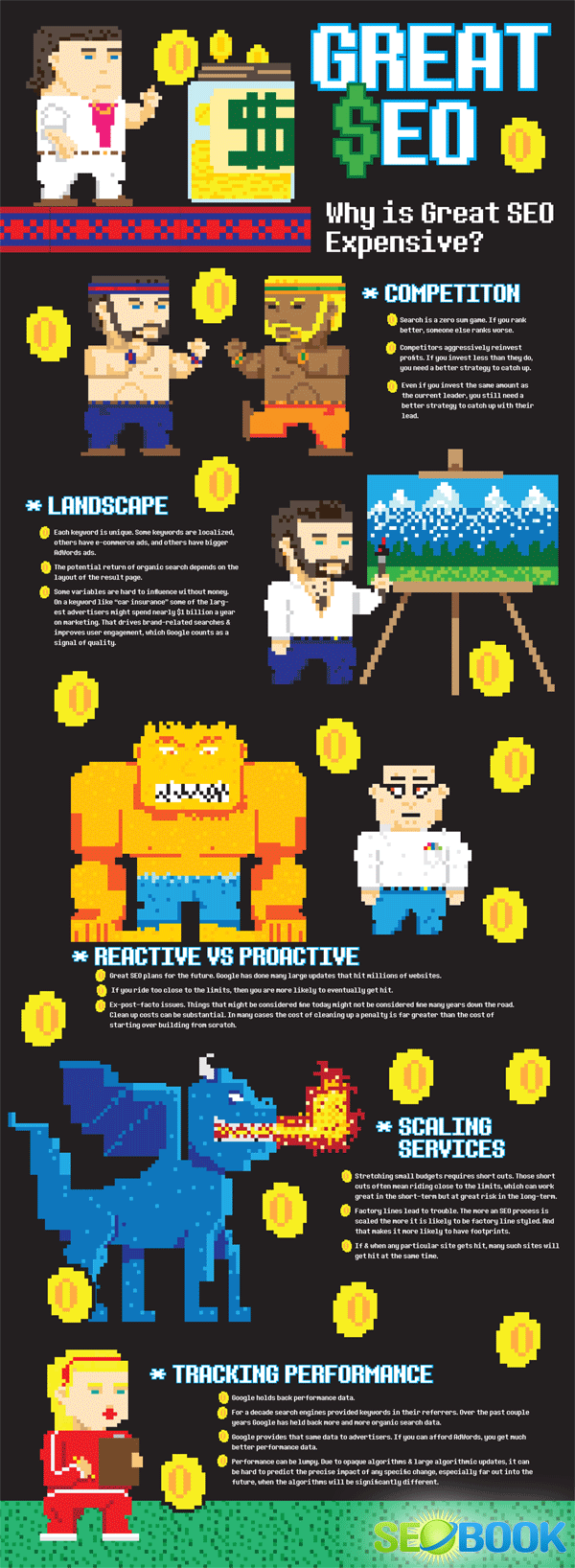
Online marketing infographic by SEO Book
April 5th, 2013 — Twitter Vine
What is Vine?
It’s a way of capturing and sharing short looping videos. When we say short, we mean short, in fact 6 seconds of short. Adding them to your tweets gives you a whole new dimension through which you can engage with your audience.
That’s all sounds great, but how can it be used in a business situation?
Here at FCB, we’re always scouring the internet to find the best information on areas beyond our own expertise and this post from Socialmediaexaminer.com fits the bill when it comes to this particular subject.
The post goes through 16 ways businesses are using Twitter Vine to:
- Engage their followers in conversation
- Highlight their brand advocates
- Display their work for a client
- Offer relevant historical trivia
- Celebrate the holidays
- Get people excited about a new product
- Take people inside their office
- Attract customers to your exhibition stand
- Educate and amaze
- Bring people into their stores
- Tell their brand’s story
- Promote a contest
- Bring presentations to life
- Show off their products
- Give fans what they want
- Just randomly amuse their audience
Grab a coffee and take a look at the videos and see if they can give you the inspiration you need to dive into Vine.
You can see the post here: 16 Ways Businesses Are Using Twitter Vine
April 3rd, 2013 — copywriter, copywriting, Copywriting briefs, Working with clients
It’s a familiar story: you run a business and have to market it. It starts gradually, but little by little you start to build your customer base and your time shifts from marketing and promotion to fulfilling orders and customer service.
You become so obsessed by offering the best service possible your marketing activities slow right down.
After the initial rush of customers begins to dwindle you suddenly realise that you’ve taken your foot off the gas and have to start marketing like crazy again.
This cycle continues until you find yourself rocking quietly in a corner wondering why you started your own business in the first place.
Then you have a brain wave and call in the help of a professional copywriter to help you create the web copy, brochure content, emails, newsletters and case studies you need to keep the customers coming your way.
But then you realise that the copywriter you’re talking to hasn’t worked in your industry before.
What do you do?
Say goodbye to them, even though you get on and know they are the best writer out there?
I hope not, because if you do you’ve forgotten one crucial thing – you are hiring them because the have the expertise you need and that means they can write strong, persuasive and compelling copy for any industry.
What you’re about to read is an earth-shattering statement:
It is not necessary for a copywriter to have written for your industry before for them to do a cracking job for you.
Wow.
Two experts working together
The copywriter/client relationship is a collaborative one – they need you as much as you need them.
You are the expert in your field, your customers and knowing what they want. They are experts in getting that message across in an engaging, persuasive and powerful way.
That’s why you must be prepared to work with your copywriter.
They will delve deep into your knowledge wanting to know stuff like:
- What do you do?
- Who do you sell to?
- Why do they need your product/service?
- How do you help them?
- What would stop them buying from you?
- What action do you want them to take when they’re read this content?
- What makes your company different to all the others?
- How do you want to be perceived by your customers?
- What sort of tone do you want?
- What is your overall aim?
And that’s just for starters because they can only write about your business if you’re prepared to tell them about it.
Just saying, “I sell insurance so write me a brochure” isn’t very helpful. If you want a great end result you need to be on hand to provide all the information they need.
Think of the relationship as the coming together of two great minds with skills and knowledge that will complement each other perfectly.
What’s the best way to find the right copywriter for you?
- Take a look at their website and see if what they say resonates with you
- Take a look at their portfolio and read some of the samples, do you like their style?
- Pick up the phone and have a chat with them or meet with them to see if you can get along
It’s as simple as that.