November 4th, 2013 — blog, blogging
You’ve read all the blogs and advice telling you that content is the best way to market your business on line. 
Religiously, you’ve followed all the advice of the experts, generated loads of content, created your own content strategy and yet, nothing’s happening.
Your content isn’t drawing in the traffic promised by the experts.
What’s gone wrong?
There are a number of reasons why your strategy isn’t working, but here are, potentially, the 10 most likely culprits:
1. You
You are writing stuff you love.
What about your readers?
What do they want to know? Surely, you’ll be more effective if you write about things that they want to know. After all, your content is there to attract readers not to massage your ego.
It’s time to put your wants on the back burner and think about your readers.
2. Experimentation
Look at your posts. Are they all pretty similar?
Your audience wants variety. They want to learn new things from you, so don’t regurgitate the same old stuff over and over.
Be bold and experiment with different ideas and different types of posts. Offer written posts, infographics, videos, podcasts etc. Mix it up a bit and keep them interested.
3. Go for quality
Are you obsessed with the number of times you post in a week?
Forget it. So long as you post regularly, it’s more important to concentrate on the quality of your posts. What’s the point in publishing 10 mediocre posts in a week that don’t attract anyone, when working on 2 or 3 high quality posts that give your readers what they want will be far more effective?
It’s this attention to detail and quality that will set you apart from other bloggers in your industry.
4. Be true to your style
Corporate blogs create their own problems, namely the number of contributors. Keeping the same style and brand image can be difficult, which is why it’s essential you produce some firm guidelines for everyone to follow.
5. Challenge
If you just write about safe subjects in a safe way, your readers are going to get bored.
Don’t be afraid to be controversial, after all that’s what’s going to get you noticed.
Challenge the status quo, throw in some radical ideas now and then and get some conversations started with your readers. Getting your stuff noticed is what it’s all about.
6. Call to action
How often do you add a call to action into your blog posts?
It doesn’t have to be a ‘buy my product/service now’, but a simple ‘what are your thoughts on this? Leave a comment below’ will show your readers you’re interested in what they have to say and want to hear from them.
You can also use your call to action to encourage people to subscribe to your newsletter or RSS feed – whatever you want really.
7. Where to post?
It’s important to have one main channel for your posts. Ideally, this will be your blog.
Then, you can create new posts and guest posts for other websites to attract a whole new audience to your work. However, by having one main outlet your readers will know where to go for their next fix.
8. Tow the line
Following on from point 4, when you have a number of contributors to your blog it is vital you have one person to oversee everything. It will be their job to make sure posts are written, that they follow your style guidelines and that comments are responded to.
9. Niche
People read blogs because they want to learn from experts.
You are an expert in your field so carve out a niche for yourself and write about what you know best.
Before long, they will get to know you are the expert in the field of pink widgets (or whatever your niche happens to be) and they’ll keep coming back for your latest words of wisdom.
10. Schedule
Your readers are creatures of habit and like to know when you’re next nugget of wisdom will be published. That’s why it’s important to stick to your posting schedule.
If, for any reason, you have to deviate from your normal posting pattern, let them know.
These are just 10 potential reasons why your content is failing to hit the mark.
When you decide to enter the world of content marketing, it’s essential you realise that it is an ongoing marketing strategy and not something you can just pick up when you get a spare 5 minutes.
Commitment, originality and determination are what will help you succeed.
November 1st, 2013 — Becoming a guest blogger, blog, blogging, blogging for business
There are several ways to get links for your website, one of which is guest blogging.
But with so many companies out there placing sub-standard blogs on websites in return for a paid for link, how can genuine bloggers be sure their links count in the eyes of Google and not classed as paid for links?
This video from Google’s Matt Cutts should help.
Thanks Matt for your words of wisdom.
October 30th, 2013 — Advertising, advertising copywriting
It’s everywhere. 
From the moment you open your eyes in the morning you are subjected to a barrage of advertising. Whether it’s on the radio, in newspapers, on billboards, on the Tube, bus or train…everywhere you go, it’s staring you in the face.
But are you taking any notice of it?
Have a think about yesterday – how many adverts do you remember seeing?
I’m willing to bet not that many.
That’s quite worrying if you’re in the advertising industry.
In Dave Trott’s book ‘Predatory Thinking – A Masterclass in Out-thinking the Competition’ (well worth a read by the way), he stated that out of an annual £18.3 billion spend (that’s on all forms of advertising):
- 89% of advertising isn’t noticed or remembered
- 4% is remembered positively
- 7% is remembered negatively
So that means UK businesses are wasting £17.3 billion. That’s got to hurt.
But advertising isn’t about producing something clever. Granted it needs to get you noticed (even if it as one of the 7%), but more than that, it needs to make people want to buy.
There’s a lot of talk these days about using advertising to raise brand awareness. That’s just a way for advertising agencies to produce ads that aren’t measureable.
According to Wikipedia, advertising is:
“…a form of communication for marketing…used to encourage, persuade, or manipulate an audience…to continue or take some new action.”
To my mind that means buying.
Your advertisement, in whatever form it takes, has to sell, otherwise what’s the point?
So when planning your next advertisement project think about your customers and what will make them buy – I’m pretty sure it’s not a flash ad that doesn’t tell them anything (O2’s ‘Be more dog’ springs to mind).
- What do they want?
- Why do they need it?
- What will it mean to them when they have it?
Answer those questions and you’ll be on your way to a raft of new customers.
What do you reckon?
What’s your take on this?
Is advertising too much about agencies touting for awards? Has the whole concept of advertising (i.e. to sell) been lost?
When was the last time you were sold to by an advert? What made it stand out for you?
Leave a comment below as this is a subject that needs a good debate.
Image courtesy of David Castillo Dominici/FreeDigitalPhotos
October 28th, 2013 — Content marketing, Content writer
You’re probably expecting me to now tell you there is one perfect method you can use that will guarantee excellent copy every time.
You’re going to be disappointed.
The truth is there is no single way to plan.
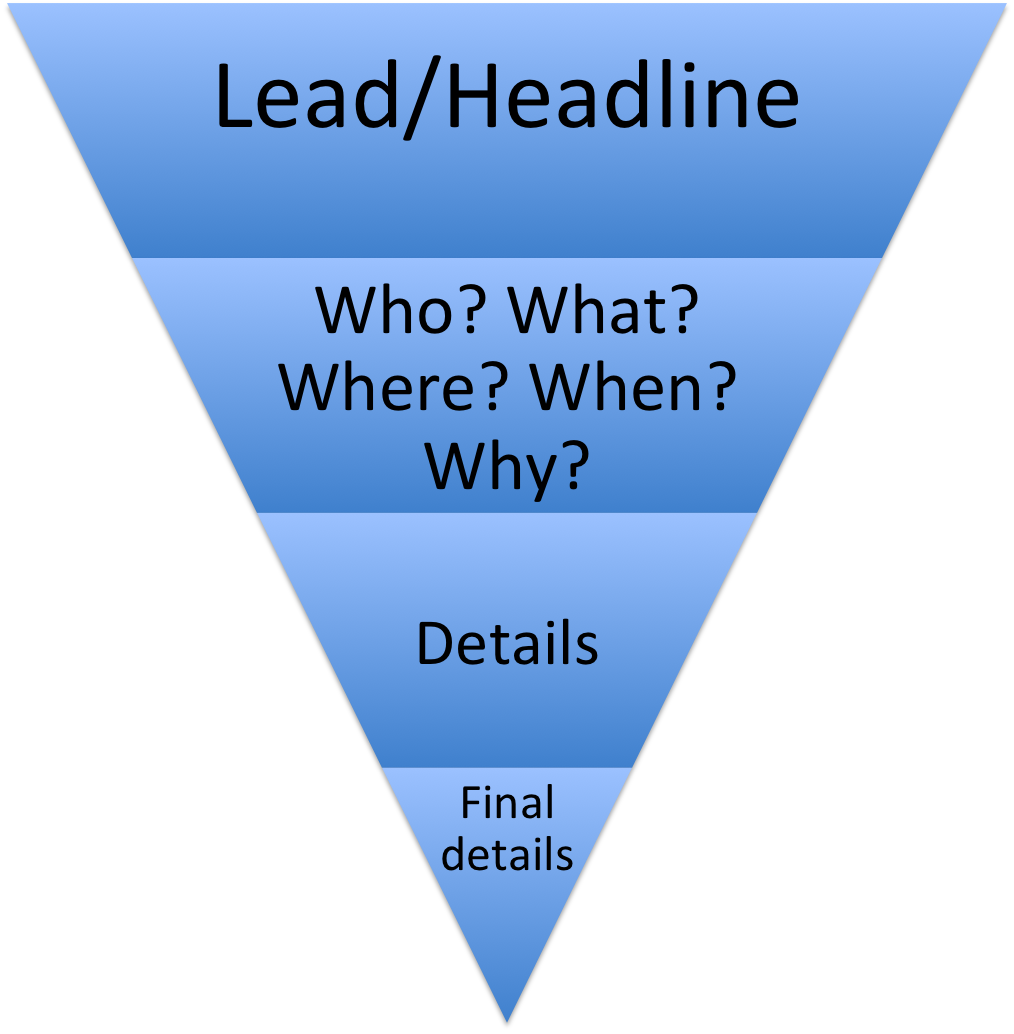
Inverted triangle
This method is great for news articles and press releases.
It ensures the most important information is at the top (beginning of the article) and the least important at the bottom. That way, the reader gets the vital stuff straight away, so should they wander off, they’ve learnt what they needed to know.
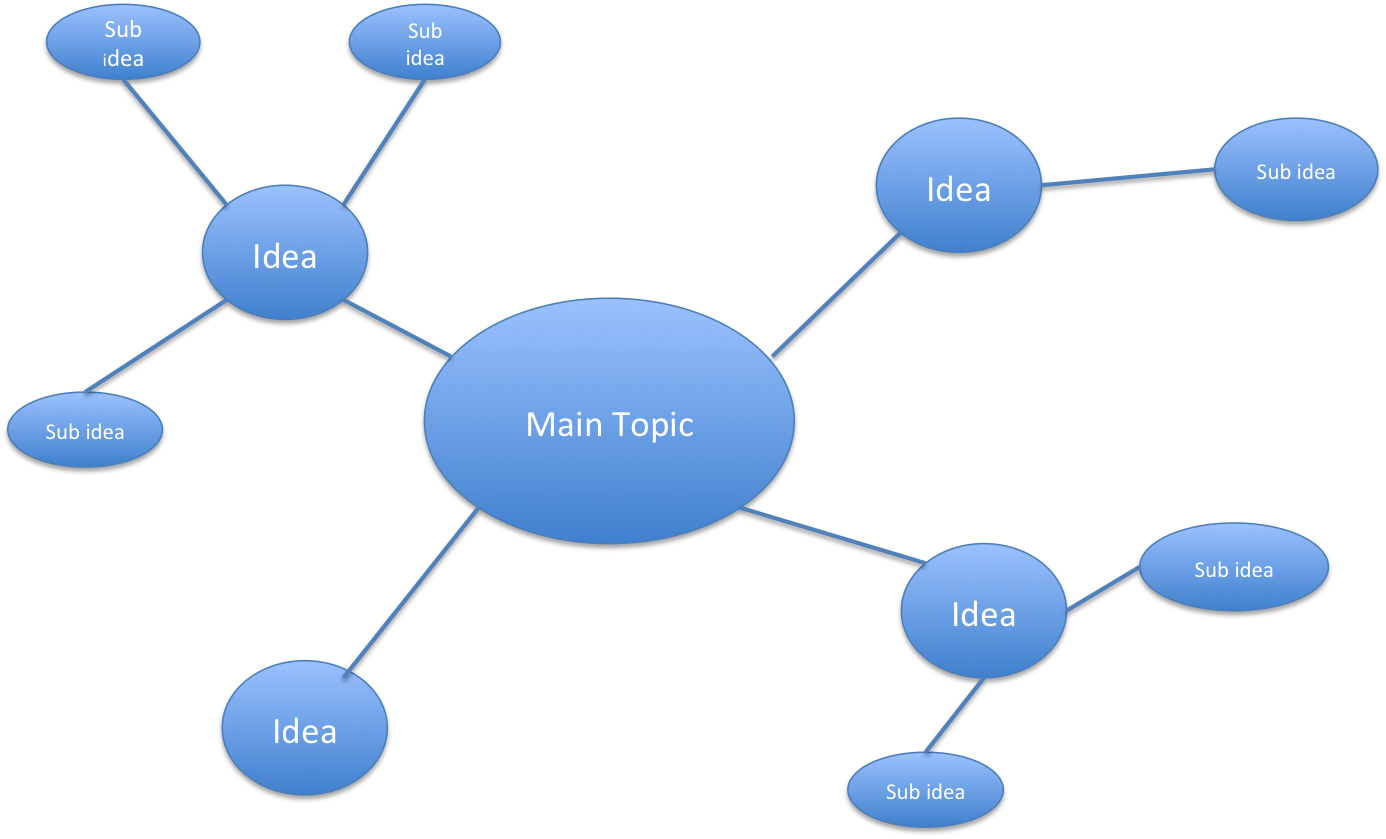
Spider diagram
Starting with a central idea, you can use these diagrams to help structure an argument or piece of content.
They are very structured and give a visual representation of how your writing will take shape. By giving it focus in this way, you can organise your information to group like subjects together. Ideal when planning a brochure, web copy or case study.
Mind mapping
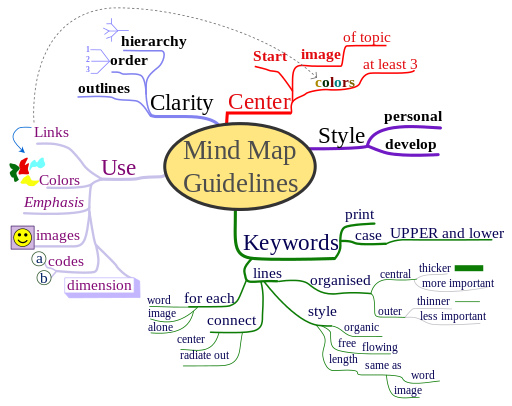
A mind map is a creative and logical way of planning out your ideas.
Starting with a central topic, mind maps grow organically, helping you plan your ideas to create coherent themes. From these themes, information of lesser importance is presented as ‘twigs’ on each relevant theme ‘branch’.
Unlike the spider diagram, mind maps tend to be colourful and a mixture of text, images and symbols and can be less ‘organised’.
(Image courtesy of Nicoguaro)
These are just 3 examples of different planning techniques that you can use. Finding the one that suits you and the project you’re working on comes down top personal preference.
One thing is for use though, whatever you’re working on, it’s essential you plan it out before your start writing if you want a coherent and well-structured result.
Over to you
Do you use one or more of these methods, or have you devised one of your own?
Does your planning method depend on the nature of the project you’re working on?
Leave a comment below.
October 25th, 2013 — Achieving goals, marketing, Starting a freelance business
No two people are the same.
We all have different strengths and weakness and excel in different areas. That’s why, for your team to be successful, you must have a wide range of people types.
That is the view of Don Fornes, CEO and Founder of Software Advice who has identified different psychological profiles, such as the ‘Giver’, ‘Champ’ and ‘Matrix Thinker’.
The one I want to look at in this post is the “Savant”.
They are amazing at what they do.
According to Don:
“Highly-functioning Savants can apply their innate ability, intelligence and determination towards the development of exceptional talent in a single field. They tend to be skilled writers, researchers and engineers.”
But at the same time they tend to be introverted and can struggle in social situations.
So what are their qualities?
Well, a Savant is usually:
- Creative
- Independent
- Committed
- A problem solver
Why does your team need them?
Simply because they’re great at what they do and because they tend to find one thing they are good at (e.g. writing, researching or engineering) they can provide your team with the expertise it needs to flourish.
Many writers show characteristics of the Savant because of their innate ability to learn and desire for perfection in everything they do.
But at the same time, these traits can cause problems. Their social anxiety can make them poor communicators, they can encounter self-doubt and depression when they discover they can’t achieve perfection in every aspect of their lives and, being non-conformists, they can challenge authority leading to clashes with management.
I’m a writer, am I a Savant?
As a copywriter, Don’s post would suggest that I am a potential Savant.
Am I creative?
Yes, I spend every day creating copy for my clients.
Am I really good at what I do?
I guess you’d have to ask my clients that one, but judging by the testimonials, recommendations and repeat business I get, then I’d say yes.
Am I focused and determined?
Most definitely, because I won’t give up until a project is complete and, when required, I can turn around work quickly.
Do I love to learn?
Considering I always have my nose in a book (when I’m not working), then yes, I do love to learn.
Am I a perfectionist?
Most definitely, in all parts of my life, I won’t let anything get the better of me. Even if it’s something I’m not the best at, I always give it my all to do the absolute best that I can. But if it falls a long way short of others, I do have the tendency to doubt myself and get very down.
What about social anxiety?
With friends and family I’m fine, but put me in a business networking environment and I clam up.
I have been working on this aspect of my personality and have started making inroads. It’s still far from my favourite activity, but I’m getting there.
Do I challenge authority?
This is where I differ from a typical Savant. Confrontation is something I avoid at all costs; so no I don’t tend to challenge authority.
What about you?
Do you recognise yourself?
Perhaps you’re one of Don’s other psychological profiles?
For any team to thrive, multiple personality types are a must. Each brings its own take on things giving a wider perspective on the project you’re working on.
What’s your take on this?
Do you believe we all have a ‘type’, or do you think we meld our personalities to the situations we find ourselves in?
Leave a comment below.
Thank you to Software Advice, who commissioned the original research, for allowing me to comment on their research.