May 6th, 2011 — copywriter, social media, social media marketing, social media training, social networking
 Most people today (in business or otherwise) know how powerful social media is.
Millions of people are participating in it in some shape, way or form every day – you can’t ignore it any longer because it’s here to stay.
If you’re in business yourself you are probably already using it to widen your market appeal, find new customers, market your brand and find new suppliers.
But what if you’re not a business owner? What if you can see the obvious potential it could have for the company you work for but the bosses aren’t having any of it.
- It’s too much like hard work
- We don’t have time for that
- Our customers don’t use social media
- We can’t monitor its effectiveness
Do those excuses sound familiar?
Well, if you can see a case for using social media within your company, it’s up to you to make your boss see the light and drag him out of the Jurassic age.
This great post on socialmediaexaminer.com helps you do just that. It looks at 7 tips for selling executives on social media to help you come up with a cunning plan to show your bosses exactly why they need to get social media savvy before they get left behind.
Show them:
- What it means in their terms – i.e. remove all the jargon to make it accessible
- How it will impact on sales
- That it’s measurable
- You’re serious by making a plan
Provide them with that type of information and how can they possibly say no?
What have you go to lose? You know social media is the way forward all you have to do is make them see it too.
Try it out and then come back and tell us how you got on.
Sally Ormond – freelance copywriter, blogger and social media addict.
May 4th, 2011 — copywriter, copywriting, copywriting tips, landing pages
 How do you feel when you search for something and find yourself on a landing page?
- Do you navigate away before you’re sold something?
- Do you hang around and have a read?
- Do you sigh and head back to your search result list for a real website?
People react differently to landing pages. To some they just scream BUY ME NOW because let’s face it, they expect to sell you something.
So how do you build trust and convince people you’re genuine and that it’s a good thing that they’ve landed on your page?
In previous posts I’ve already looked at what you should have on your landing page and what you can do to improve your conversion rate, so now I want to look at how you can encourage your visitors to trust you. After all, if there’s no trust there won’t be any sales.
How to gain trust
Most people don’t like being sold to. A landing page is there to sell (or gather leads etc.) so you’ll have to work hard to gain your visitors’ trust.
There are three main ways you can do this:
1. Testimonials
The good old testimonial – what would we do without them?
People like to hear how other people felt about buying from you. They want to know if the product worked how the customer service was etc.
Ideally the testimonials you use on your landing page will be linked to the product or service it is offering. That way you can convey all its benefits in your copywriting and your testimonials can back it up with real examples from happy customers.
2. Trusted logos
Are you or your company a member of an industry regulatory body, local business group or do you have some sort of certification relating to your product/service?
If the answer is yes, add their logo to your landing page. This will help establish trust because you’ll be seen as a bona fide company.
3. Privacy policy
This is very important if you’re looking to capture email addresses on your landing page.
No one wants to sign up for something only to be bombarded by emails from third parties.
Make sure you either have a few sentences outlining your privacy policy or link to your privacy policy page within your main website. If you do the latter make sure the link opens the page in a new window because you don’t want them to leave your landing page.
These simple tips will help you gain the trust of your visitors. Do you do anything else? If so please share it by leaving a comment.
May 2nd, 2011 — blog, blogging, blogging for business, copywriter, copywriting tips, search engine optimisation

So you fancy yourself as a bit of a blogger?
You’ve set your blog site up, added in all the plug-ins you need and chosen a design that is perfect for you.
Writing your posts is coming fairly easy and you’ve had the odd comment left now and then but nothing to shout about.
But you begin to notice your stats. You only seem to be attracting a few readers, not the shed loads you’d envisaged when you started out. Not only that but numbers seem to be dwindling.
What’s going on?
You’ve got a problem, that’s what’s going on. Your readership is dropping and people who do find your blog are not staying.
The problem is you’re not being effective – your posts aren’t grabbing them anymore.
Learn to become effective
Lesson 1:
First off read one of your posts.
Forget the fact that you wrote it so you’re obviously going to think it’s brilliant. Is it speaking to you?
Are you talking to the reader or at them? Using ‘you’ and ‘your’ in your posts rather than ‘I’ and ‘we’, will make a huge difference. You’re immediately involving the reader in your post. You’re building rapport, drawing them in, gaining their trust.
Lesson 2:
What does your post look like?
Is it one solid block of text, or is it broken into small paragraphs and sub headings like this one?
No one wants to read something that looks like War and Peace. For a start, very few people like reading from a screen and so, if faced with a solid screen of text, won’t bother reading it.
Using features such as:
• Headings
• Sub headings
• Bulleted lists
• Images
Will add interest to your post and make it look more welcoming.
Lesson 3:
What happens when you get to the end of your posts?
Do you ask your reader to do anything? Or do you just let them wander off?
Adding a call to action makes a huge difference. It doesn’t have to make a sale, it could ask them to sign up to your newsletter or even leave a comment. Asking them to take an action is involving them in your blog – it shows that their opinion matters to you.
Lesson 4:
This is where your subject matter comes into play.
As you’ve probably guessed I’m a copywriter so when I started this blog I made the decision that all my posts would be related to copywriting, marketing and social media.
So when someone comes back to my blog they have a fair idea of the kind of information they’ll find here. If they want to find out about website copy or SEO, they know they can search for that term or check out my archive list and they’ll find the information they need.
My blog acts like a mini directory for all things copywriting and marketing.
But if you have posts covering all manner of subjects on your blog how are people going to know what they’ll find? Find your niche and stick with it – make yourself an authority in your own field and people will flock to you for your help and advice.
Lesson 5:
This one doesn’t have anything to do with your writing; it’s more concerned with the look of your blog.
Create something that’s multi coloured and full of ads and you’ll scare people away. Make yours a memorable brand by sticking with a couple of complimentary colours. It’ll become instantly recognisable so when your readers return it will be like slipping on a pair of comfortable slippers.
Blogging is a great way to help your SEO and to make a name for yourself on the internet.
Are you blogging regularly? Do you have a unique way of attracting visitors? Share your experiences by leaving a comment – go on, I’d love to hear what you have to say.
April 29th, 2011 — copywriting tips, social media, social media marketing, twitter
If you’re a business owner breaking into the world of Twitter you’ve probably set up your account, uploaded your avatar (using your photo), written your short bio and are now sitting in front of the screen scratching your head.
How do you go about using it as a business/social media platform?
Unless you want to land yourself the leading role in Spamalot don’t constantly bang on about business all the time.
Admittedly some of your offers will be useful to your followers but if you constantly tell people when you’re doing, how amazing your business is and what you’re selling they are going to get seriously cheesed off. The result will either be a lot of people hitting the unfollow button or a bunch of people that aren’t going to be interested in engaging with you.
So if you can’t use it for business bombardment what can you use it for?
Well, let’s get one thing straight, you can mention your business and tell people what you’re doing but just not all the time. Intersperse business tweets with personal reflections and comments. Twitter is all about building relationships and as such people need to get to know the real you. The only way that’s going to happen is by your personality shining through.
Have you gone pale at the thought of being ‘you’ online? That’s why I love Twitter so much. As a one-woman-band I think it’s really important that people get to know who I am. So my tweets usually consist of:
- Links to my latest blog posts
- Links to other things I found interesting
- Inane ramblings (there’s a lot of those)
- Copywriting/marketing tips
- Retweeting other people’s tweets
- Pleas for help
That last one highlights one of the major benefits of Twitter (certainly in my eyes). Since I’ve been tweeting I’ve had various IT issues and the such like which I’ve tweeted about only to have several knight’s in shining armour come to my rescue. And when you work alone that type if support is priceless.
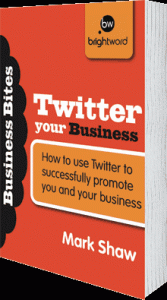 Of course it has also proven very beneficial to me in finding new clients too. You can read all about that in Mark Shaw’s fantastic Twitter Your Business book (click on the image to go and take a look at it). At just £10 it’s a great investment to make sure you get the most out of Twitter – and before you ask, no, I’m not on commission!
If you need some help getting going follow me @sallyormond and I’ll follow back and give any help I can.
Twitter is full of great people so take the plunge and come and join us – you might enjoy it.
April 27th, 2011 — copywriter, copywriting tips, internet marketing, website design
 If you’re starting up a business or looking to revamp your existing website, what will you go for – a custom build or a template?
For many of us cost is everything and a template design is undoubtedly cheaper. But is it always the best choice?
Yes you can download them and stick in your content and a few images and, hey presto, you’ve got yourself a web presence without forking out fees for a web designer (or copywriter). But web designers exist for some very good reasons:
- They understand the web
- They understand how it works
- Basically, they know what they’re doing.
Eric Brantner has written an interesting post on seohosting.com’s blog giving 5 Reasons Not To Use a Web Template. Although he does admit to having used them, Eric goes on to explain why they aren’t always a good idea.
1. You still have to be customised
Even though many of these templates are downloadable and ready to go, most of them are still going to have to be customised somehow to suit your design needs. Unless you happen to be a whiz at HTML coding you’re still going to need a web designer.
2. Not the best for branding
You brand has to be recognisable online. If you use a template, that’s going to be tough because you’re just going to like thousands of other sites out there.
It will be much better to get a custom design that will make your brand stand out.
3. Restricted zone
The template isn’t going to be easy to tweak, plus you’re probably going to be tied to licensing agreements with the template designer which will govern how you use the website. You will also probably have to have a link back to the designer’s own website somewhere.
4. You’re not alone
Hundreds, possibly thousands of people have downloaded the same template as you. Do you really want to be seen as a generic design rather than as someone with your own identity?
5. Bad news for SEO
Many templates aren’t designed with SEO in mind so getting the search engine spiders to crawl your site could be difficult, and as for ranking…if it can’t be crawled you’re not going to rank.
Eric’s tips are very valid and if you’re considering downloading a template design it’s well worth holding fire and reading through this list again.
If you’re serious about marketing your brand online you’re going to have to make a serious investment. Cutting corners now will not pay off.